Czechia landscape and city view

About Czechia

About Czechia

A country profile of Czechia: name, geography, historical lands, regions, watersheds, landscapes, state symbols, language, public identity, Europe, culture, science, innovation and everyday orientation.

Central EuropeGermany, Poland, Slovakia, Austria
3 landsBohemia, Moravia, Czech Silesia
14 regionsincluding Prague
EU & Schengenmember of both

Country profile

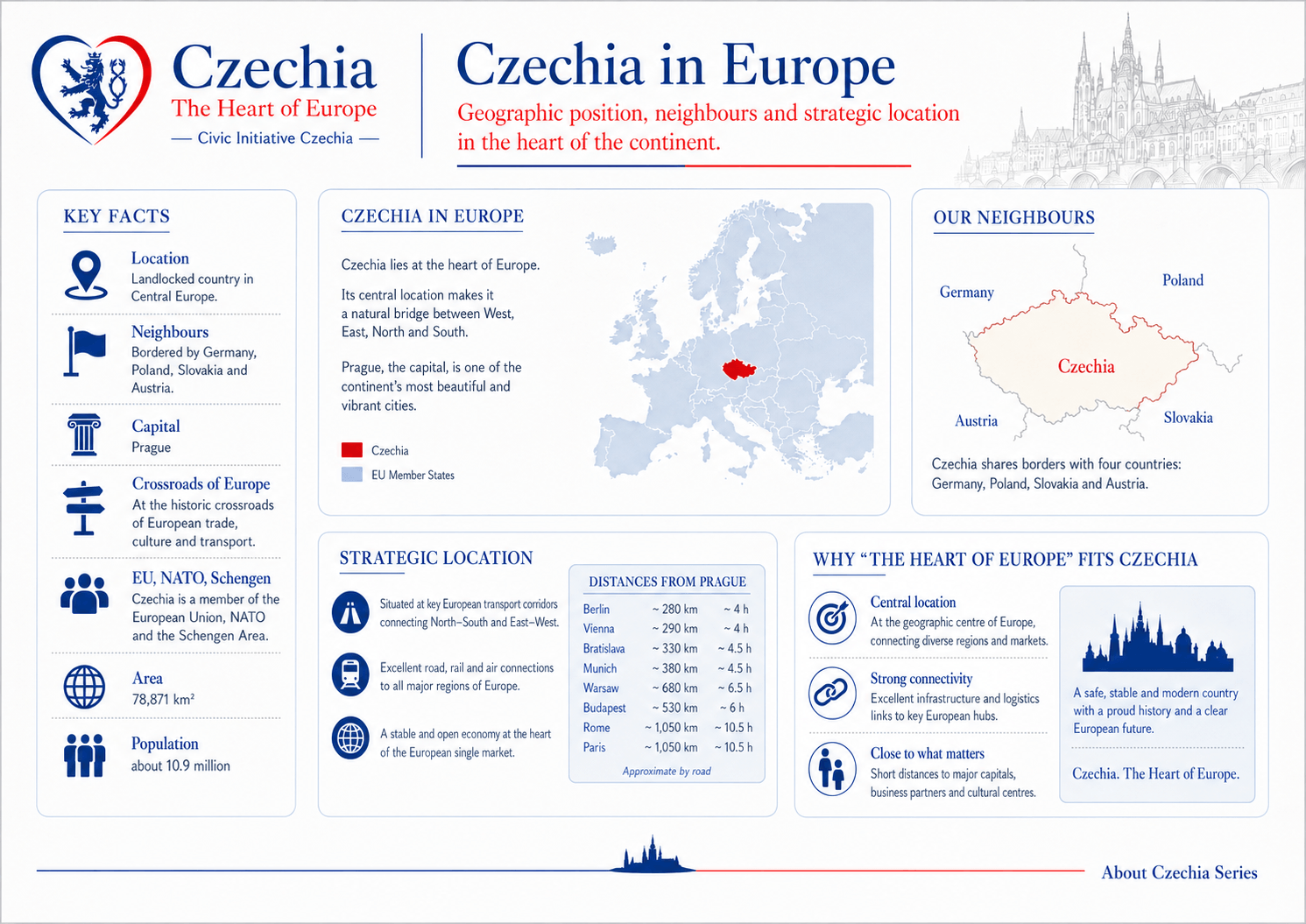
Czechia is a Central European country.

Czechia lies in the heart of Central Europe, bordered by Germany, Poland, Slovakia and Austria. It brings together the historical lands of Bohemia, Moravia and Czech Silesia; a modern regional structure; strong urban and industrial centres; protected landscapes; a distinctive language; official state symbols; and a clear position inside the European Union and the Schengen Area.
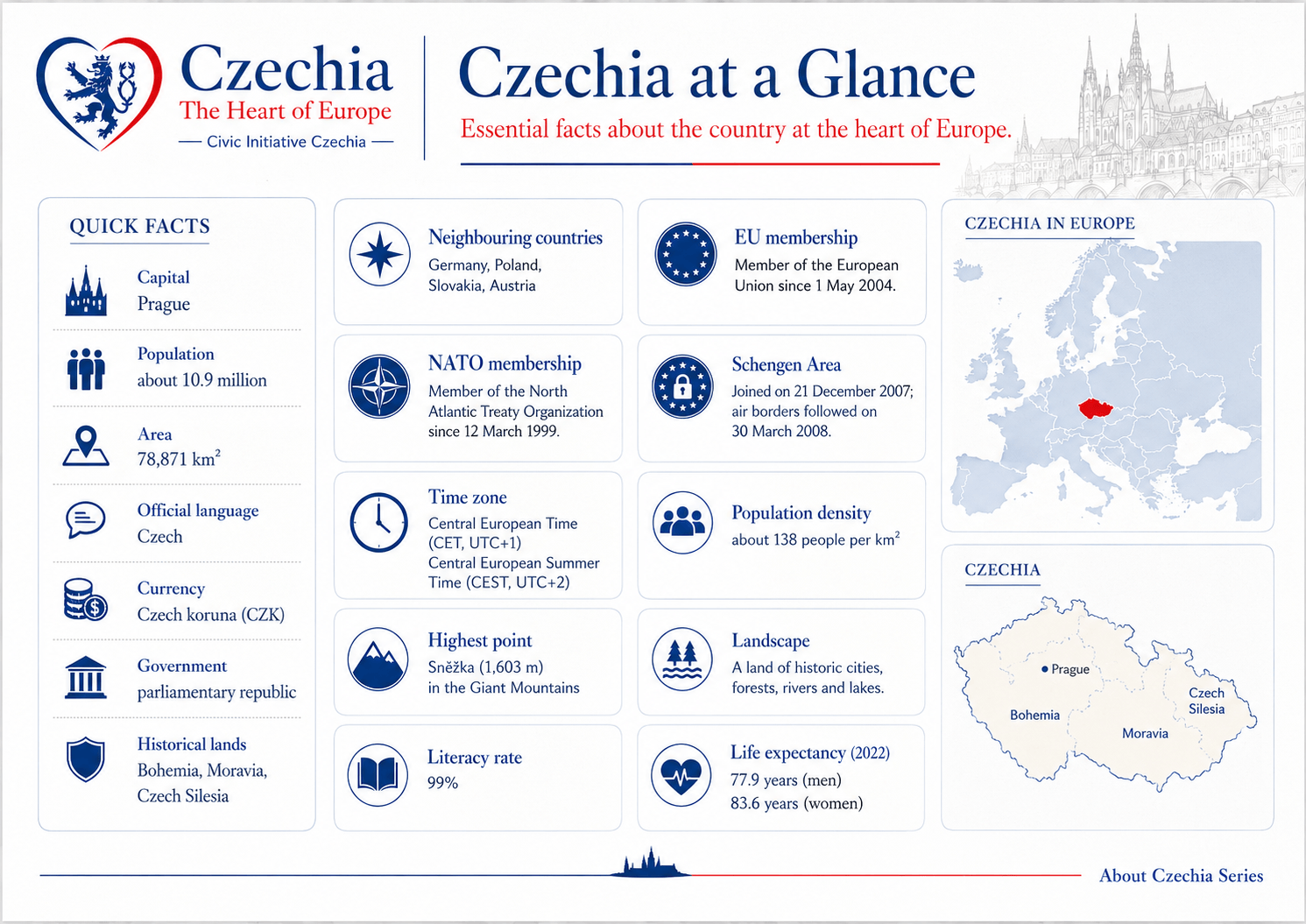
Czechia at a glance

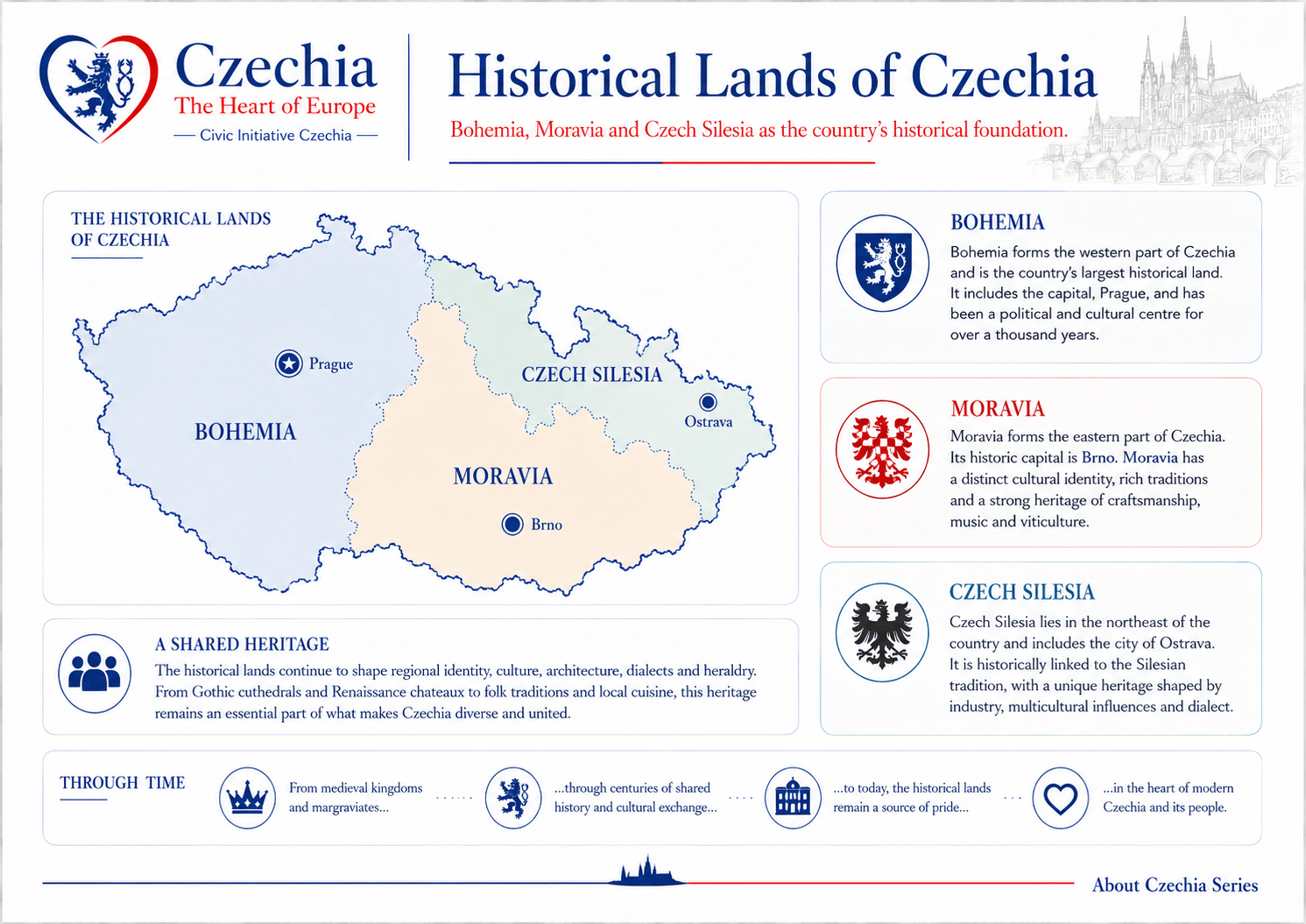
Historical lands

Bohemia, Moravia and Czech Silesia give Czechia its historical depth.

The historical lands explain the country’s heraldry, regional memory, cultural vocabulary and territorial identity. They are visible in the greater coat of arms and remain important for understanding how Czechia is spoken about inside and outside the country.

historical lands of Czechia

Nature, regions and landscapes

Czechia is shaped by mountain rims, basins, rivers and regional life.

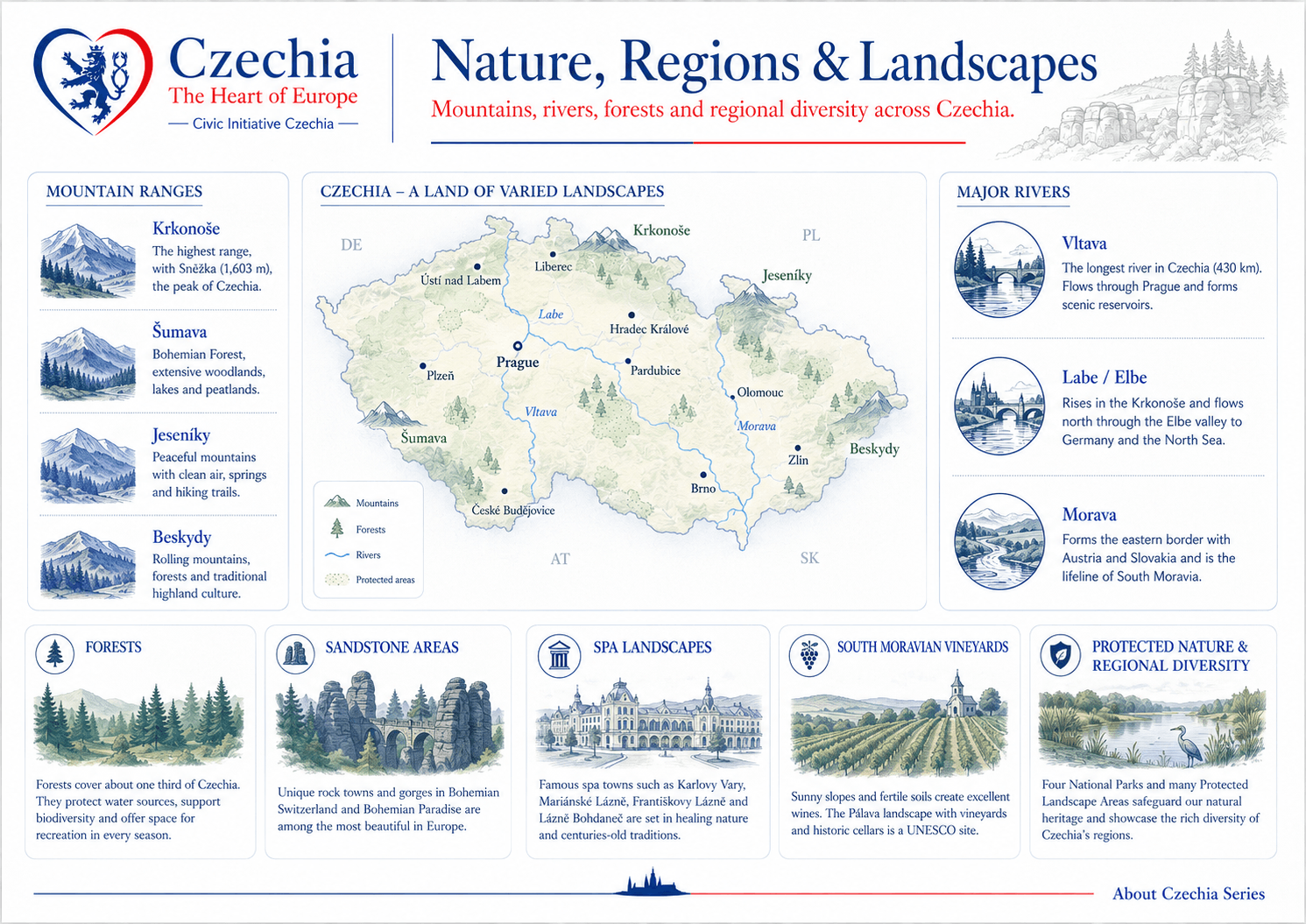
The country is framed by mountain systems and opened by valleys, basins and corridors. Its landscapes include forests, vineyards, sandstone formations, karst, spa areas, industrial regions and protected nature.

nature, regions and landscapes of Czechia

State symbols

Official symbols give Czechia its ceremonial and visual language.

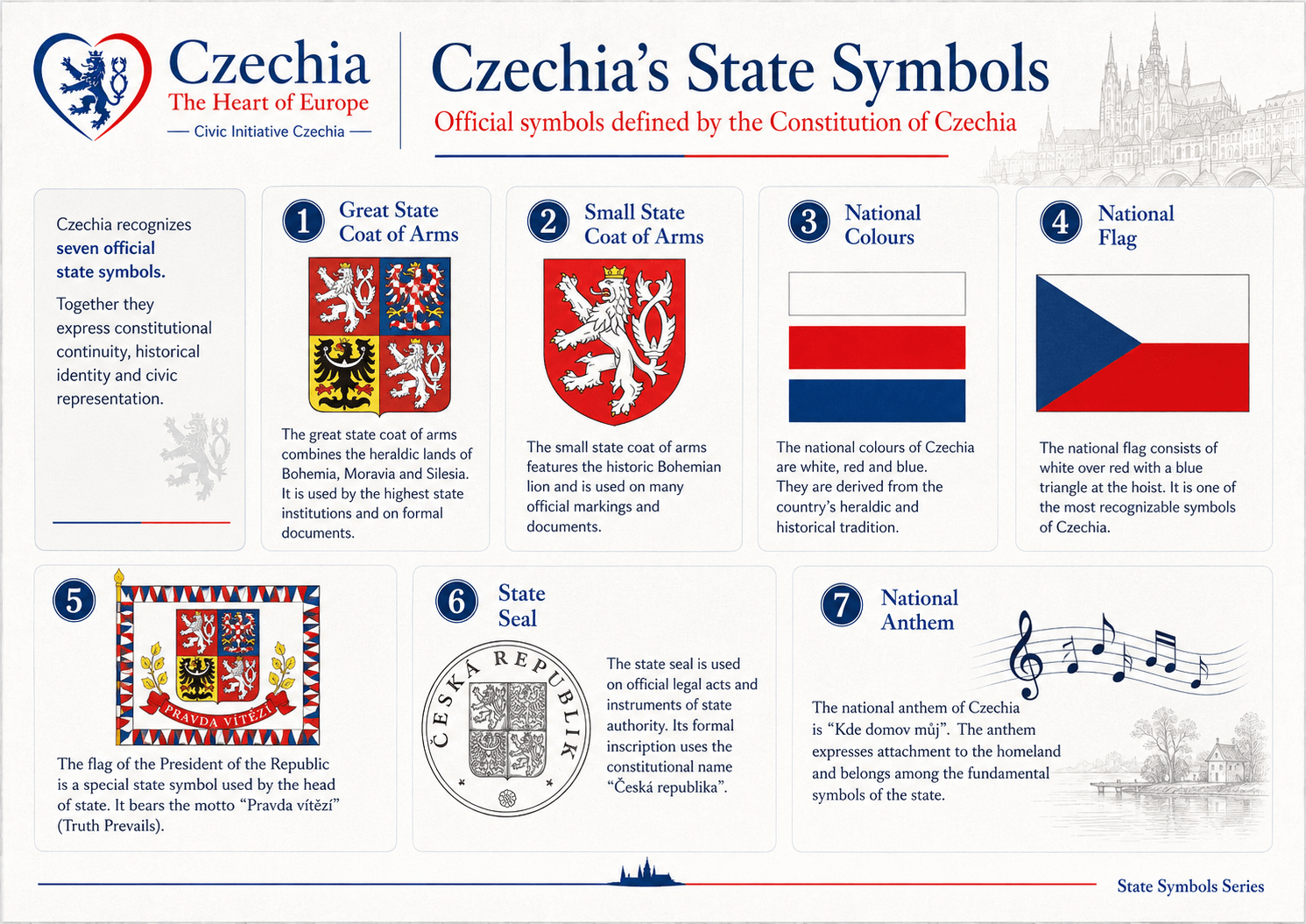
The flag, coats of arms, state colours, state seal, anthem and presidential standard connect modern Czechia with historical lands, public protocol, ceremonial representation and national recognition.

state symbols of Czechia

Civic identity

Czechia’s public identity is civic, cultural and institutional.

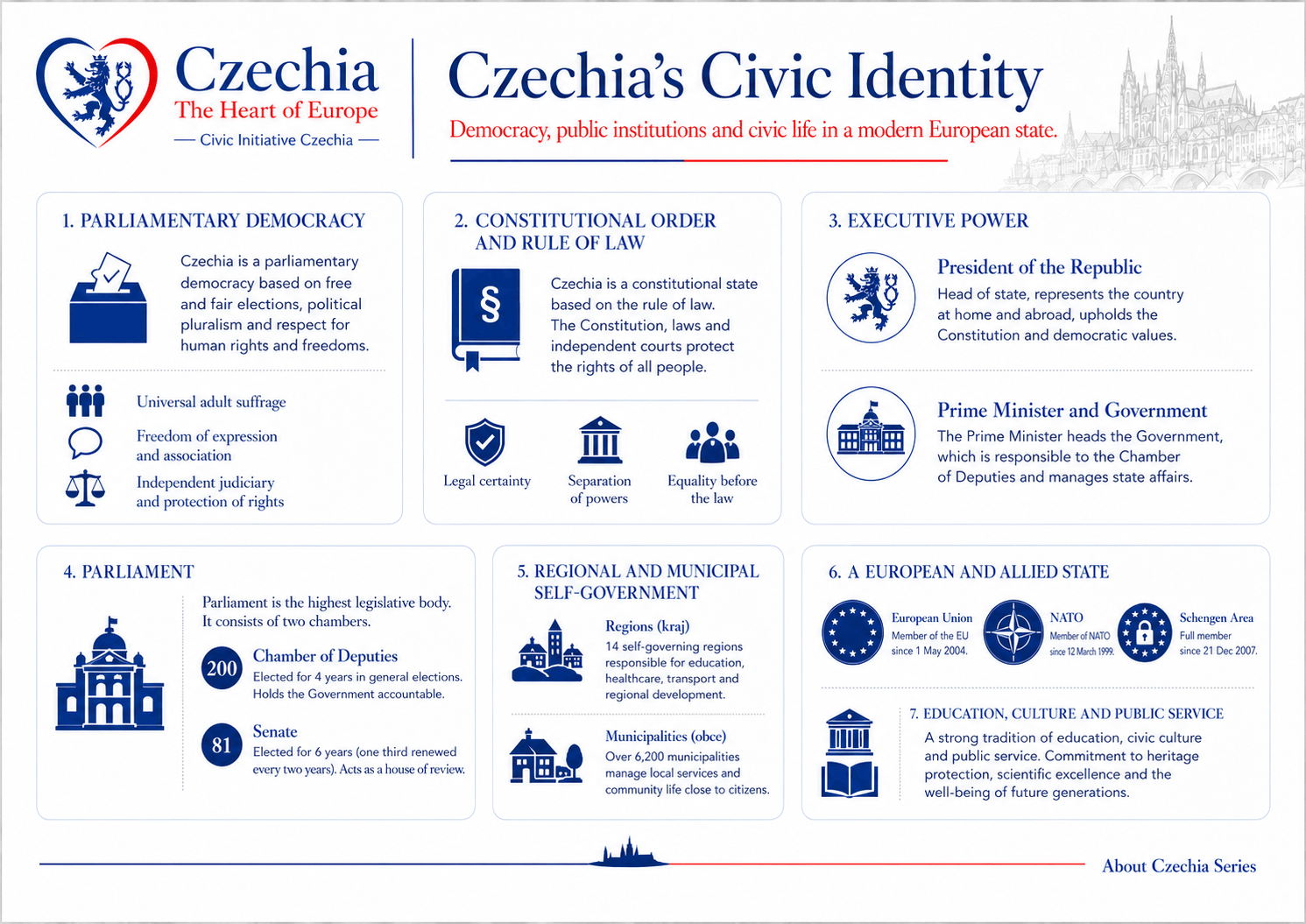
Czechia is represented not only by symbols and maps, but also by language, public institutions, civic memory, democratic experience, education, towns, regions, media use and international communication.

civic identity of Czechia

Culture, science and innovation

Czechia combines cultural memory with modern knowledge and industry.

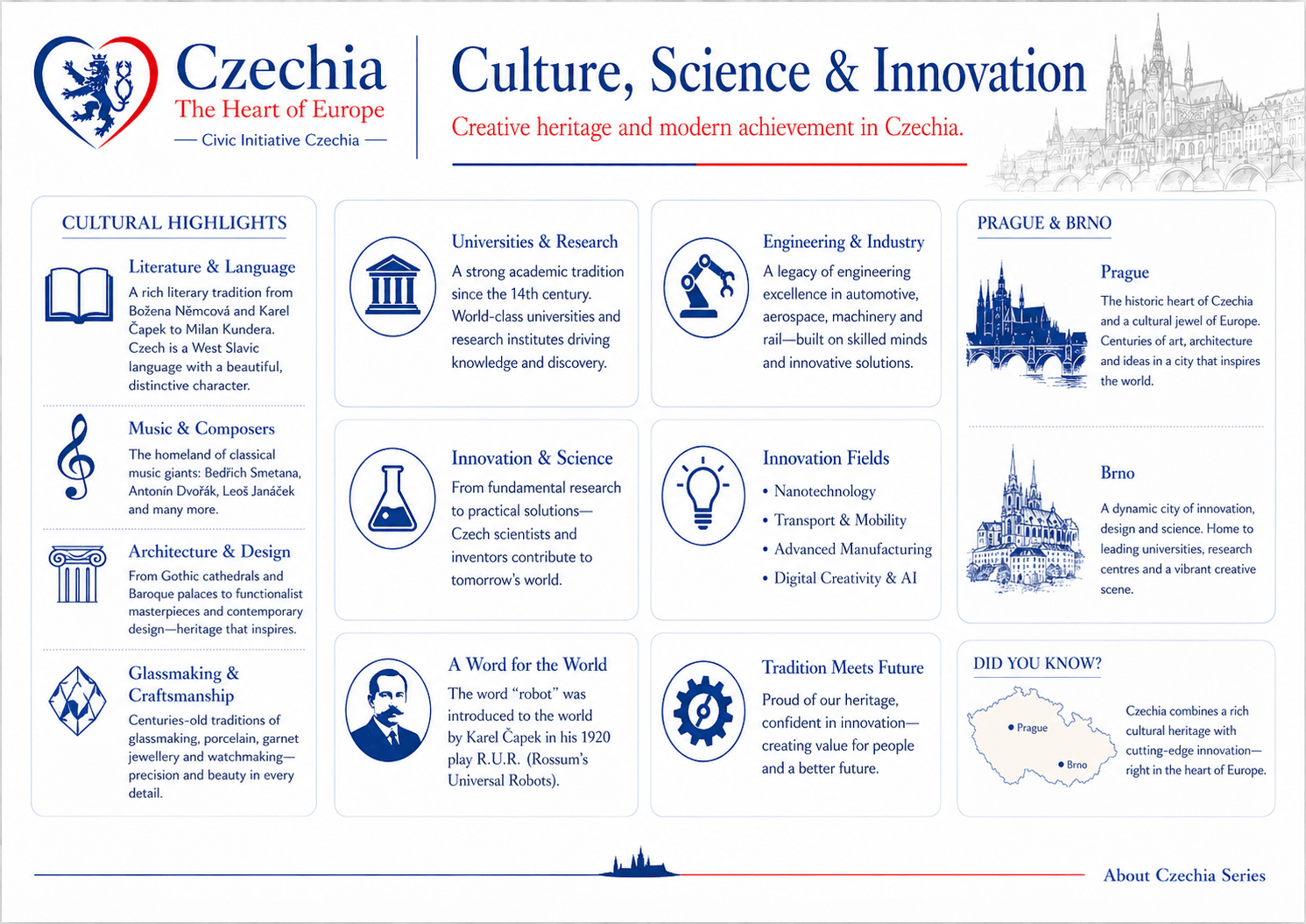
The country is known for architecture, literature, music, film, design, glassmaking, engineering, industry, research, universities, technology and creative work. Its cultural identity and innovation profile reinforce each other.

culture, science and innovation in Czechia

European position

Czechia belongs to Central Europe, the EU and the Schengen Area.

Czechia joined the European Union in 2004 and the Schengen Area in 2007. It remains outside the euro area and uses the Czech koruna, while participating in European institutions, mobility, trade, education, research and regional cooperation.

Czechia in Europe

Timeline

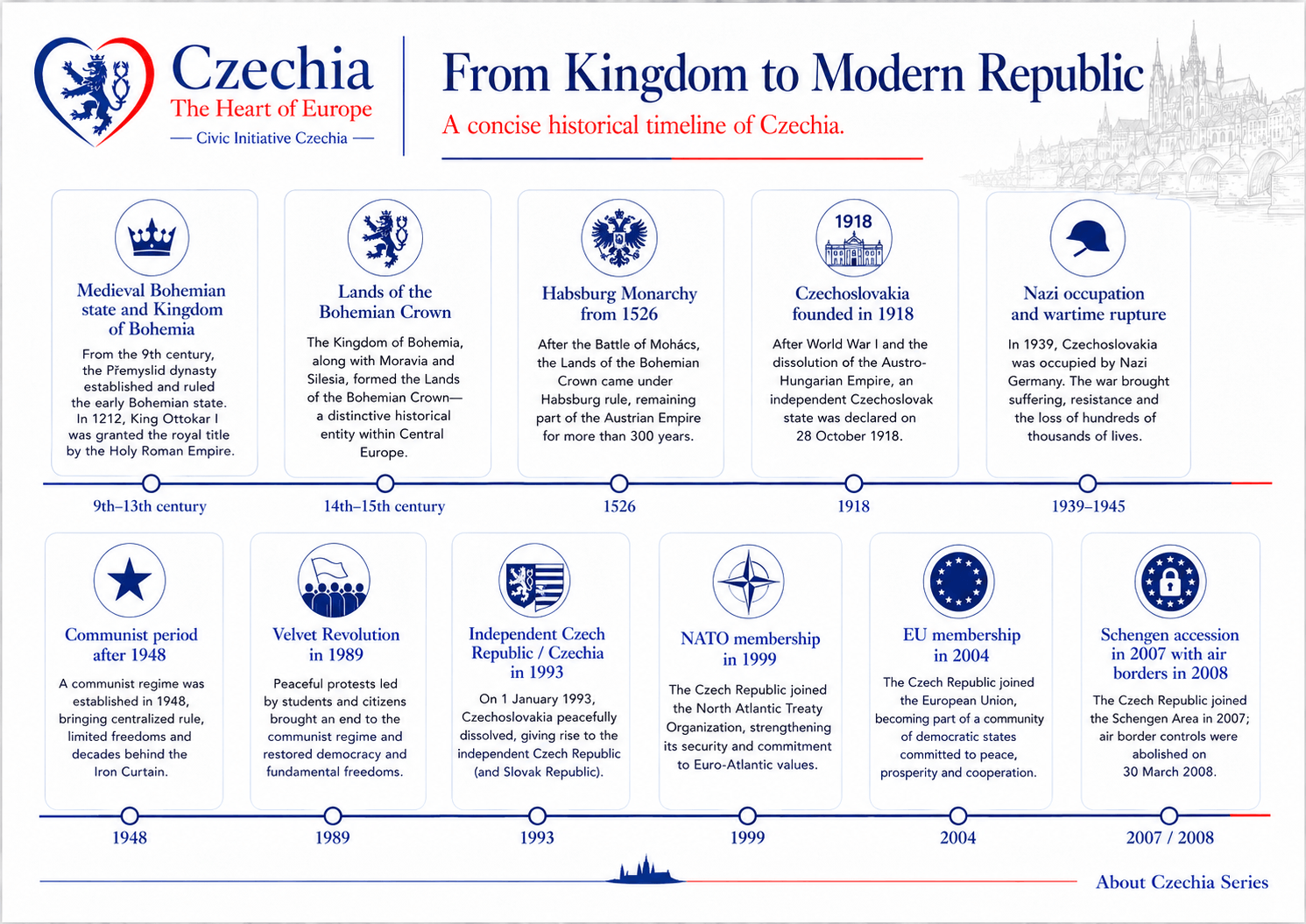
Czechia’s story is a continuity of lands, statehood and modern institutions.

The country’s public story includes the historical Czech lands, the Kingdom of Bohemia, Czechoslovakia, the independent Czech state, EU membership, Schengen membership and the present-day effort to promote Czechia accurately worldwide.

  1. 1918Czechoslovakia is established after the First World War.
  2. 1993The independent Czech state is created after the peaceful dissolution of Czechoslovakia.
  3. 2004Czechia joins the European Union.
  4. 2007Czechia joins the Schengen Area.
  5. TodayCzechia is promoted internationally through its name, symbols, regions, culture, public identity and European role.
timeline of Czechia