Overview
Everyday life, services and first reference points
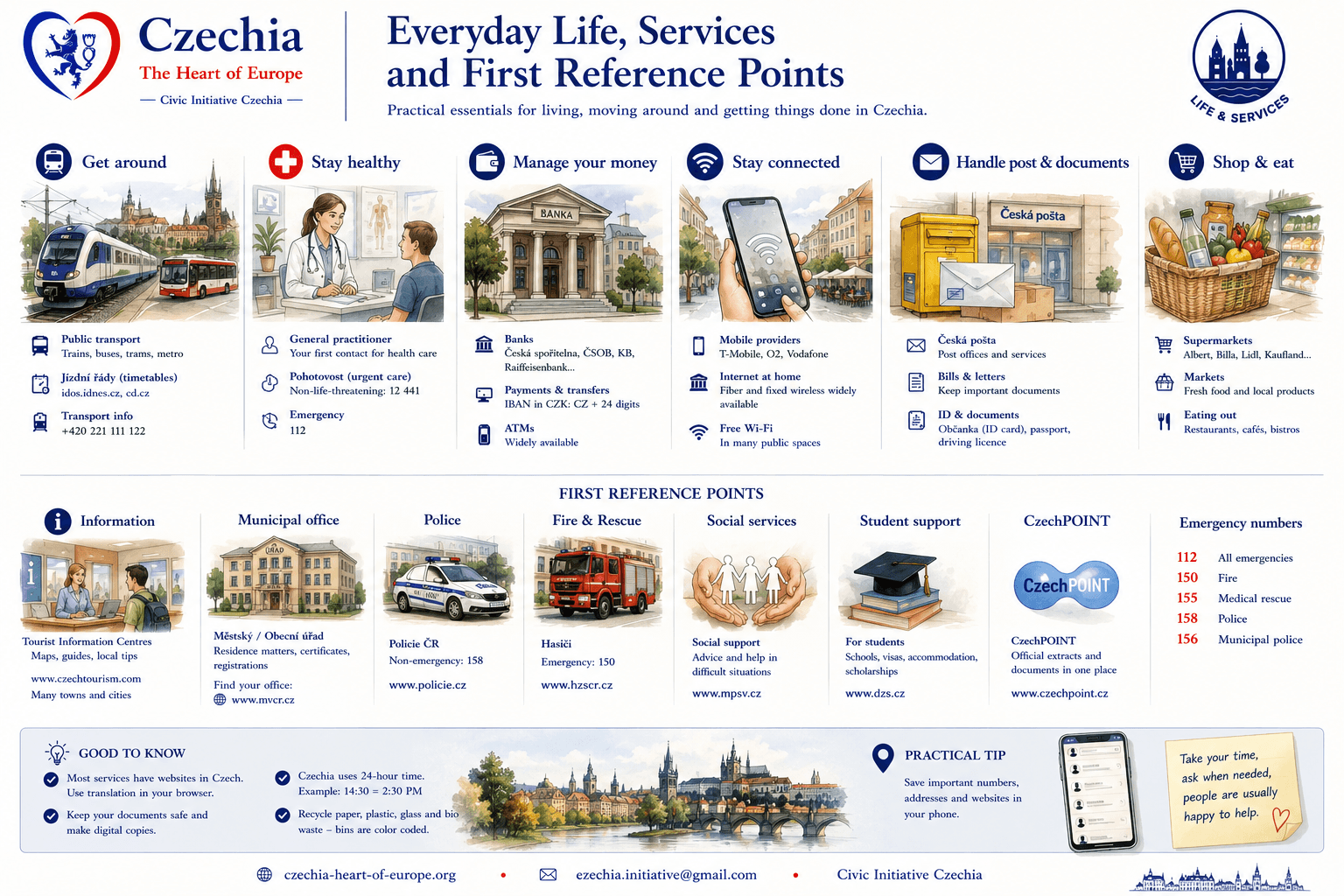
Everyday life in Czechia is shaped by transport, municipalities, healthcare, schools,
housing, shops, banks, mobile providers, internet access, emergency services and local support.
This section brings those practical areas together as first reference points.
The pages follow common situations: arriving, moving around, finding a place to stay, getting
medical care, handling urgent situations, studying, supporting family life, finding assistance
and meeting ordinary daily needs.
Practical orientation
Payments, phone, internet and everyday access
After arrival, everyday life quickly depends on a few practical tools: a way to pay, a working
phone number, internet access, a reliable address, basic documents and the ability to receive
information from schools, providers, offices or service contacts.
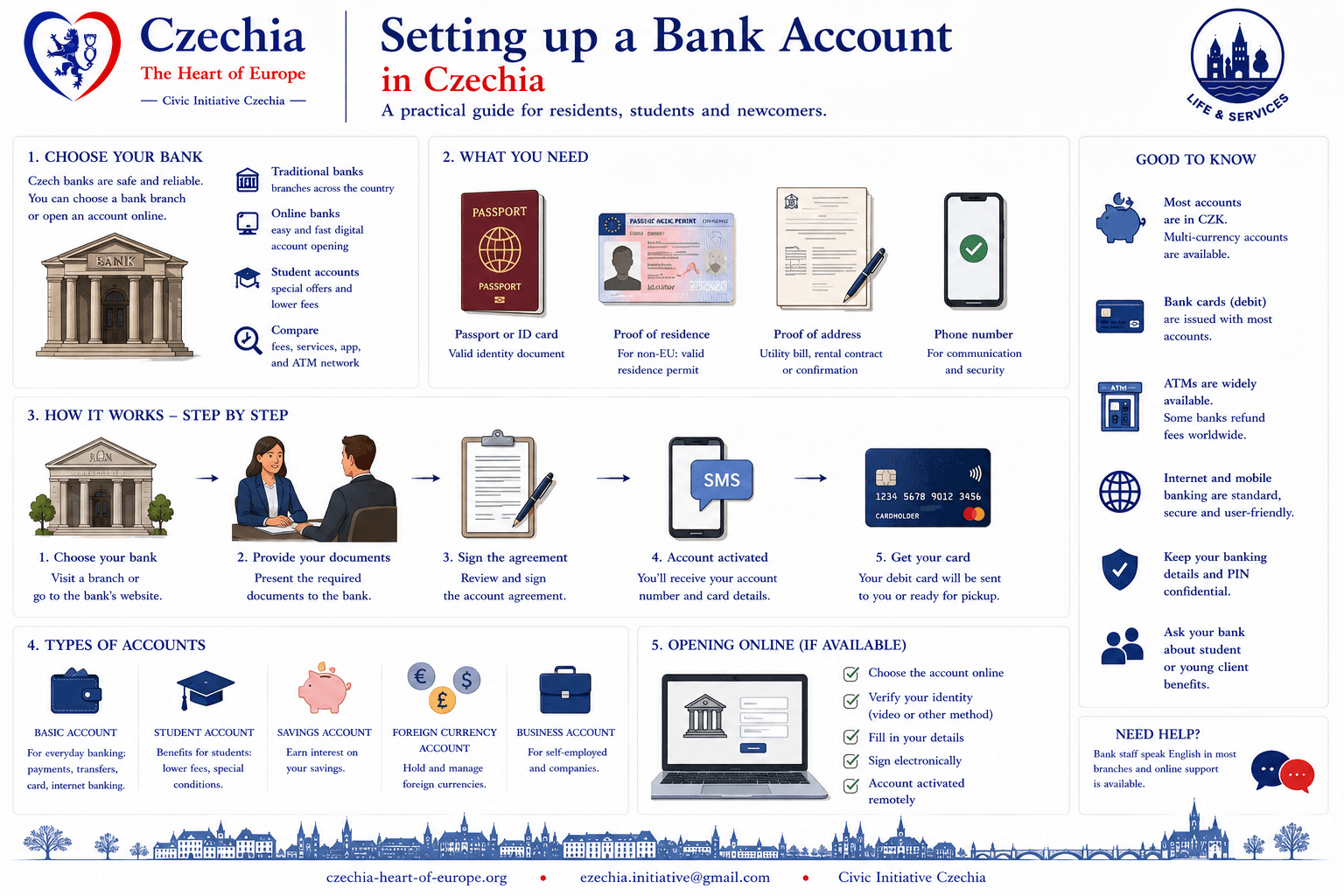
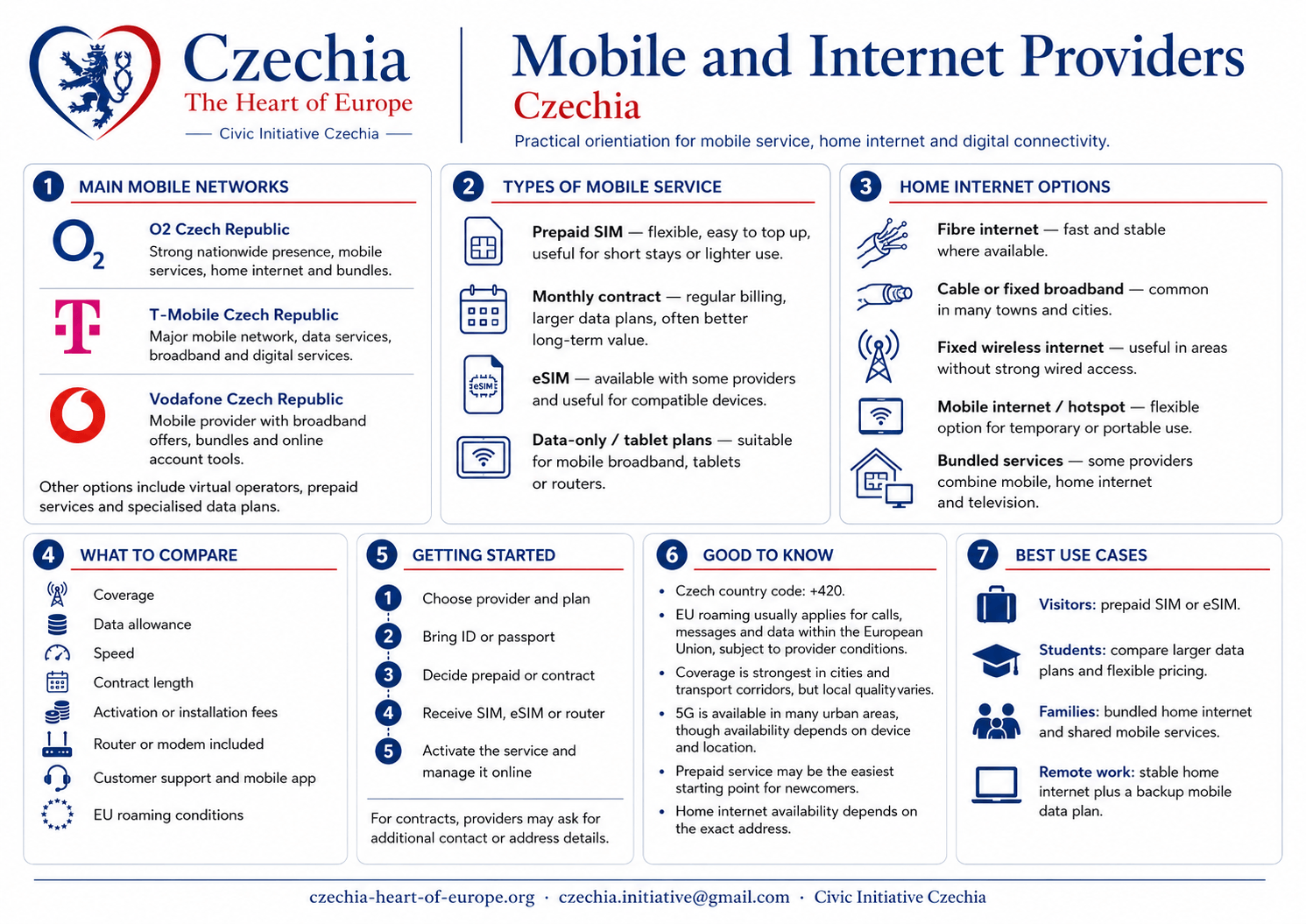
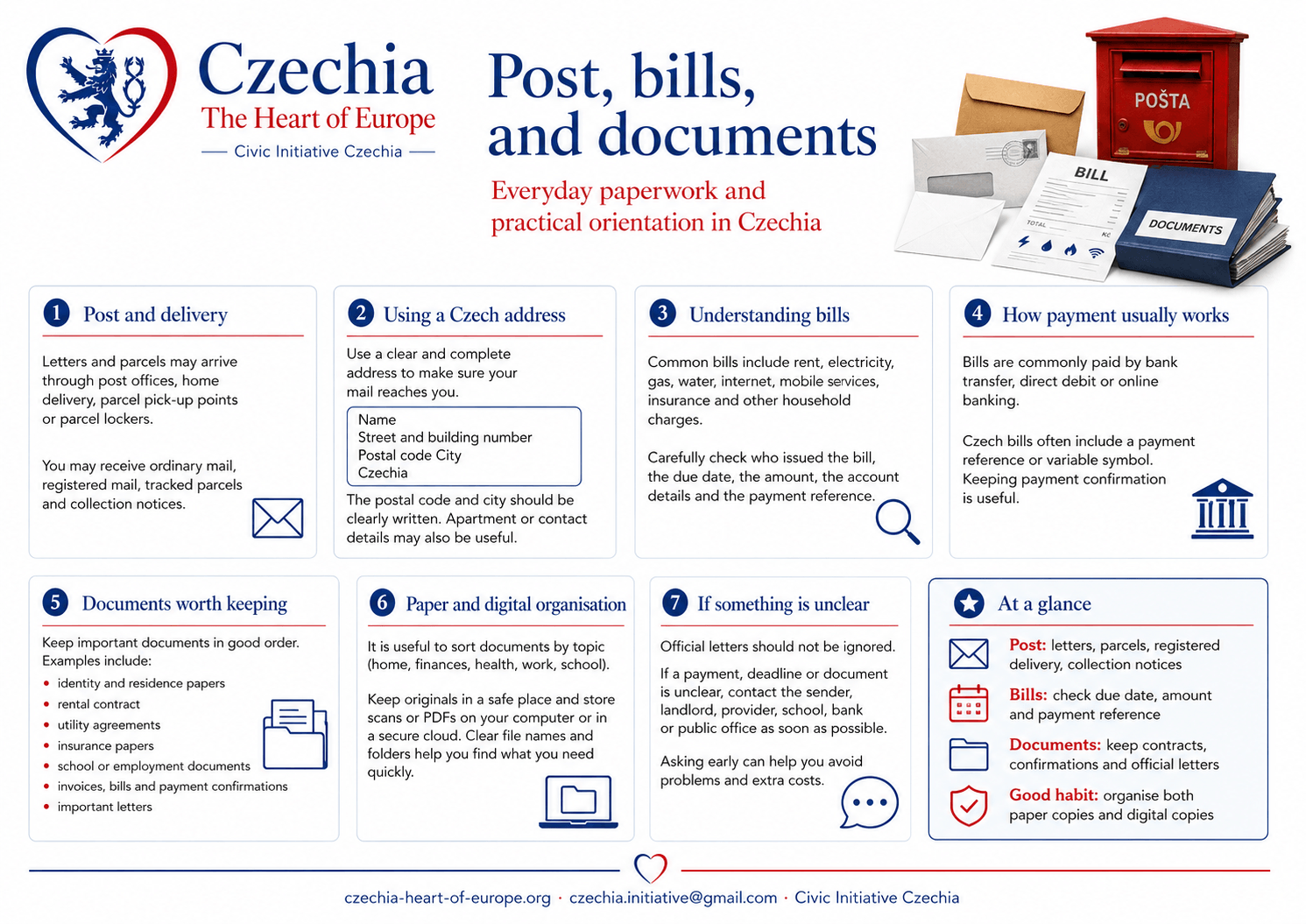
Bank accounts, payment cards, ATMs, SIM cards, mobile data, home internet, postal services,
insurance papers, housing bills and recurring contracts are usually handled by private providers,
but they affect access to schools, health care, transport, housing, deliveries and appointments.
Payments
Banking, cards and cash
Bank accounts, payment cards, transfers, ATMs, fees and cash availability affect housing, tickets, shops and services.
Connection
Phone and internet
SIM cards, mobile data, home internet and public Wi-Fi affect appointments, school contact, maps, tickets and public information.
Records
Post, bills and documents
Postal services, contracts, utility bills, insurance papers and address-related documents should remain easy to find.
Arrival
Arriving, moving and finding a local base
The first questions are usually concrete: how to arrive, how to move, where to stay, what
address to use and which services are nearby. Transport and accommodation form the first layer
of everyday orientation.
First steps
First practical steps
Most practical needs appear in a simple order: arrival, local address, phone access, payment,
safety, health access and then longer-stay arrangements. This order keeps urgent information
separate from later administrative questions.
Arrival
Confirm your airport, rail or bus connection, local transport option and accommodation address.
Local base
Check entrance instructions, payment conditions, nearby grocery options, pharmacy access and public transport stops.
Connection
For a longer stay, arrange phone and internet access and keep key documents easy to reach.
Safety
Save emergency numbers, know your location and keep urgent health or police contact information accessible.
Health
Know how your insurance works, where the nearest pharmacy is and which medical service fits the situation.
Longer stay
For study, work, family or residence matters, check the relevant school, employer, municipality or public office.
Care and support
Care and support begin with the situation
The right contact depends on the situation. Immediate danger belongs to emergency services.
Health questions may lead to a pharmacy, doctor, urgent-care service or hospital.
Immediate danger
Emergency first
Use emergency numbers and follow operator instructions. Location and immediate risk matter first.
Ordinary care
Doctor, pharmacy or urgent service
Choose according to severity: pharmacy advice, general practitioner, specialist, urgent care or hospital emergency.
Study and family life
Study, children and household needs
Study and family life connect several systems at once: housing, transport, documents, schools,
healthcare, local offices, communication, payments and support contacts. Students and families
often need orientation across daily life, not only one institution.
Daily needs
Shopping, support and ordinary access
Daily life also depends on ordinary access: food, medicine, payments, phone contact, internet,
postal services, local shops, public offices and help when someone is vulnerable or temporarily
in difficulty.
Local services
Public services depend on place and provider
Public services in Czechia are not experienced only at national level. Many practical questions
are handled by municipalities, regions, schools, insurers, transport operators, banks, postal
services, mobile providers, utility providers or local offices.
National rules give the framework. Local offices and service providers usually explain the
concrete procedure, opening hours, documents, fees and contact points.
Municipality
Local offices and public life
Address matters, local fees, public spaces, waste collection, family services and community information.
Region
Transport, hospitals and schools
Regional authorities often coordinate transport, health facilities, education networks and social services.
Provider
Institution or operator
Transport companies, schools, hospitals, pharmacies, banks, landlords, insurers and utility providers give situation-specific rules.
Visitors and newcomers
Different stays, different practical needs
A short visit usually starts with immediate orientation: arrival, local transport,
accommodation, payment, emergency contacts, pharmacy access and basic daily needs.
A study stay, work stay or family relocation requires a wider practical frame:
housing conditions, health insurance, school or university services, documents,
local offices, bank account, phone number, internet access, public transport habits
and support contacts.
The longer someone stays, the more local the questions become. Municipal services,
regional transport, healthcare providers, schools, landlords, banks, insurers, utility
providers and public offices gradually become part of everyday orientation.
Short visit
Stay, movement, safety
Accommodation, tickets, payment, emergency contacts, pharmacy access and local transport.
Study stay
School, housing, insurance
University services, dormitories, student cards, health insurance, banking and city transport.
Longer stay
Address, offices, family, care
Residence-related duties, local services, housing, insurance, phone, internet and health-care arrangements.
Official references
Primary reference pages
Use official portals and service providers for current procedures, eligibility, opening hours,
phone numbers, documents and emergency information.