World Heritage in Czechia

Atlas · World Heritage

World Heritage

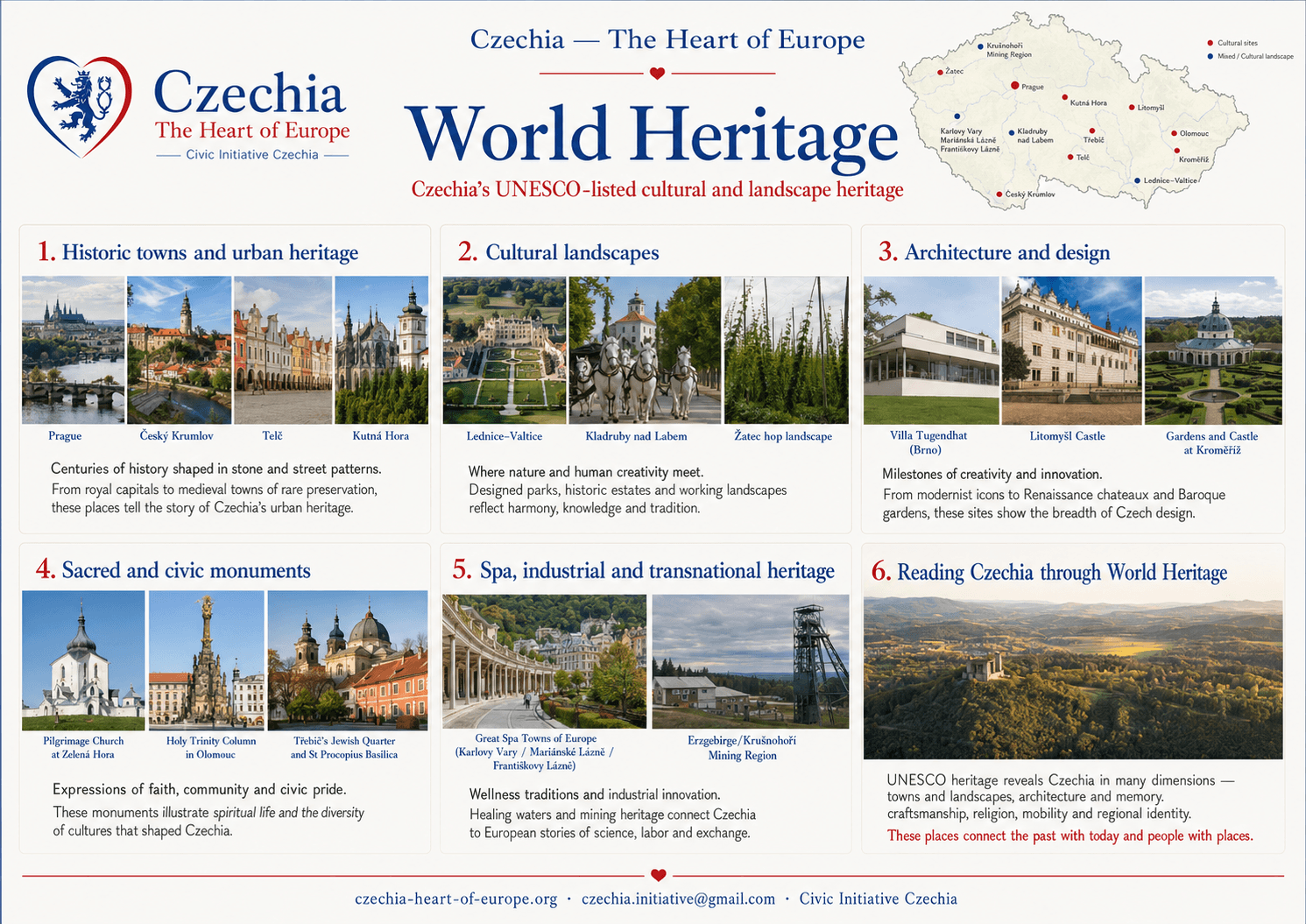
Czechia has 17 UNESCO World Heritage properties: historic centres, religious monuments, castles and châteaux, cultural landscapes, modern architecture, Jewish heritage, mining heritage, spa towns, a hop-growing landscape and a natural beech forest component. Use this page to identify what each site represents and how it fits into Czechia’s regional and historical geography.

17 propertiesinscribed for Czechia
16 culturaltowns, buildings, landscapes
1 naturalbeech forest component
1992–2023inscription years

Overview

UNESCO World Heritage in Czechia: what visitors should know first.

Czechia’s World Heritage sites are spread across the country and cover several kinds of heritage. Some are best visited as historic city centres, some as individual monuments, some as landscapes, and some as transnational heritage shared with other European countries. The list is useful for planning travel because it shows where Czechia’s most internationally recognized heritage is located and what each place is known for.

The main groups are easy to recognize: historic towns such as Prague, Český Krumlov, Telč, Kutná Hora and Třebíč; architectural monuments such as Zelená Hora, Litomyšl, Olomouc and Villa Tugendhat; cultural landscapes such as Lednice-Valtice, Kladruby nad Labem and Žatec; and wider European heritage systems such as the Krušnohoří mining region, the Great Spa Towns of Europe and ancient beech forests.

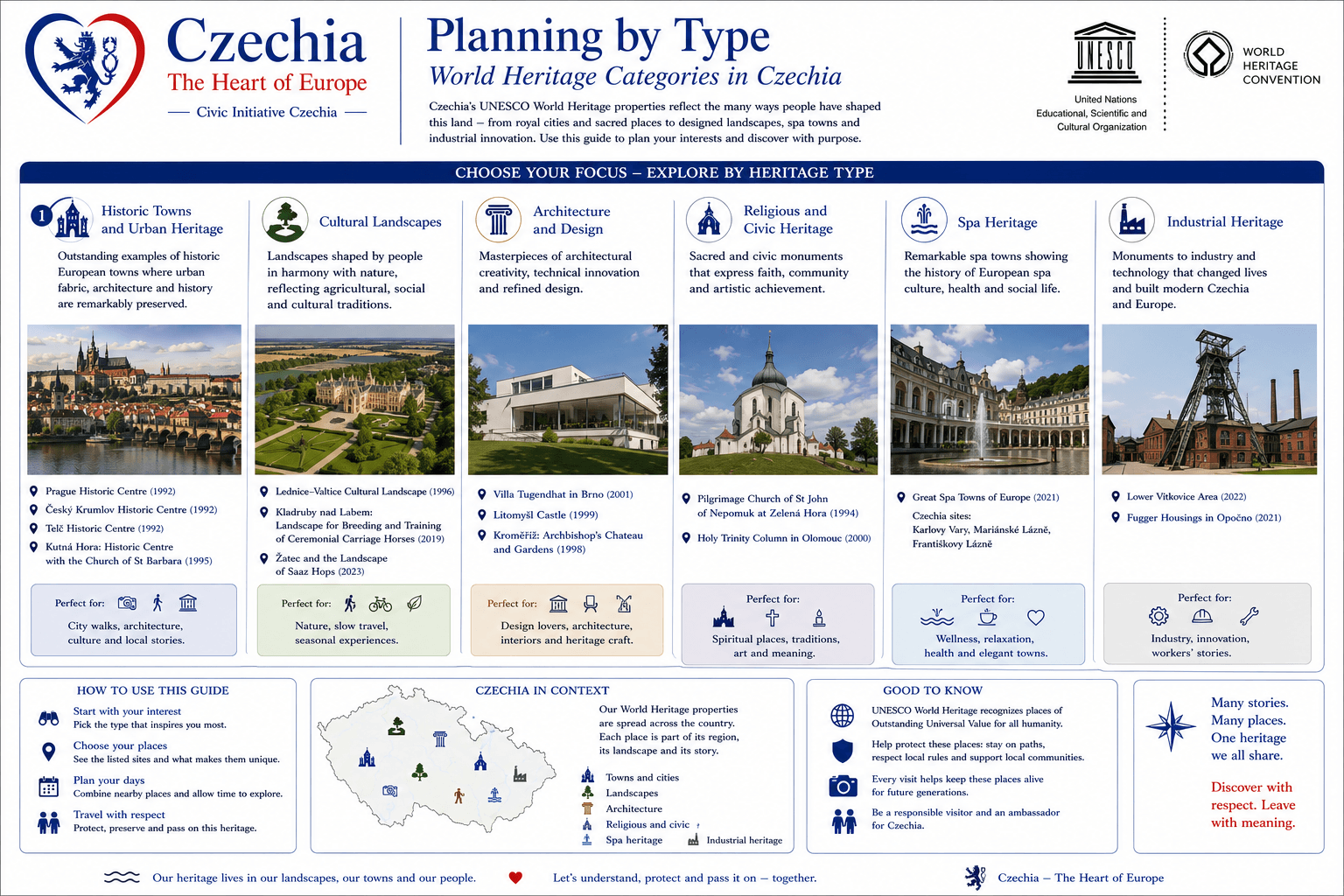
Planning by type

Choose the sites by the kind of visit you want.

Visitors can plan World Heritage travel in Czechia by theme. Historic centres are best for walking routes through streets, squares, churches and viewpoints. Castles, châteaux and gardens need more time for interiors and grounds. Landscapes are best understood with maps, viewpoints and movement through the wider area. Modern architecture and individual monuments are usually shorter, focused visits.

Historic centres Walkable urban heritage Prague, Český Krumlov, Telč, Kutná Hora and Třebíč are suited to walking, viewpoints, churches, squares and town fabric.
Monuments Focused architectural visits Zelená Hora, Olomouc, Villa Tugendhat and Litomyšl work well as planned site visits with attention to design and context.
Landscapes Grounds, parks and wider setting Lednice-Valtice, Kladruby nad Labem and Žatec need landscape reading, not only a stop at one building.
Transnational sites Shared European heritage Krušnohoří, the spa towns and beech forests connect Czechia with wider European systems of mining, health culture and nature.

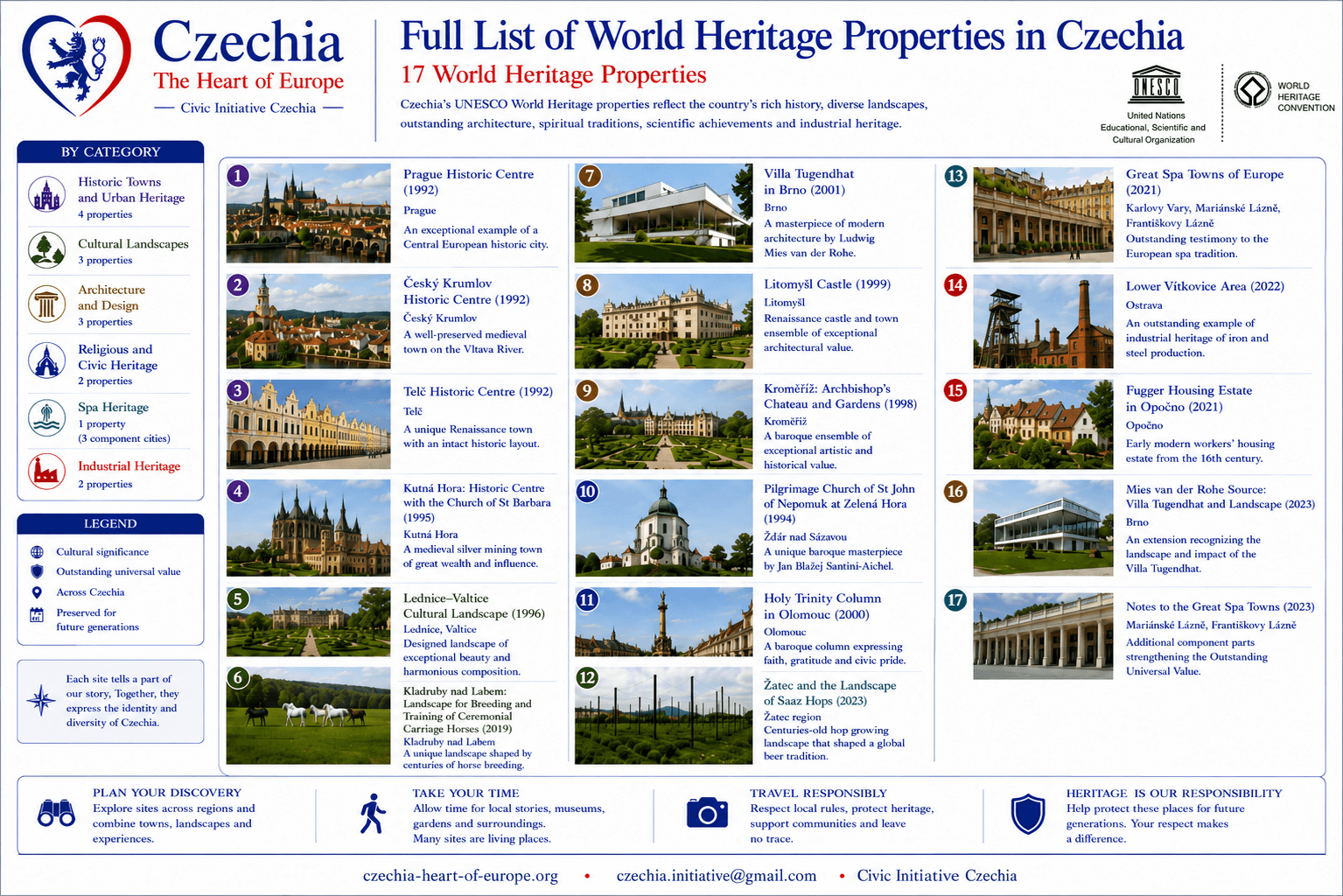
Inscribed properties

The 17 World Heritage properties connected with Czechia.

This list gives the practical reference: official property, inscription year and the main reason to recognize the site. Check the official page of the monument, town or landscape before visiting because opening hours, interior tours, access rules and restoration closures vary by site and season.

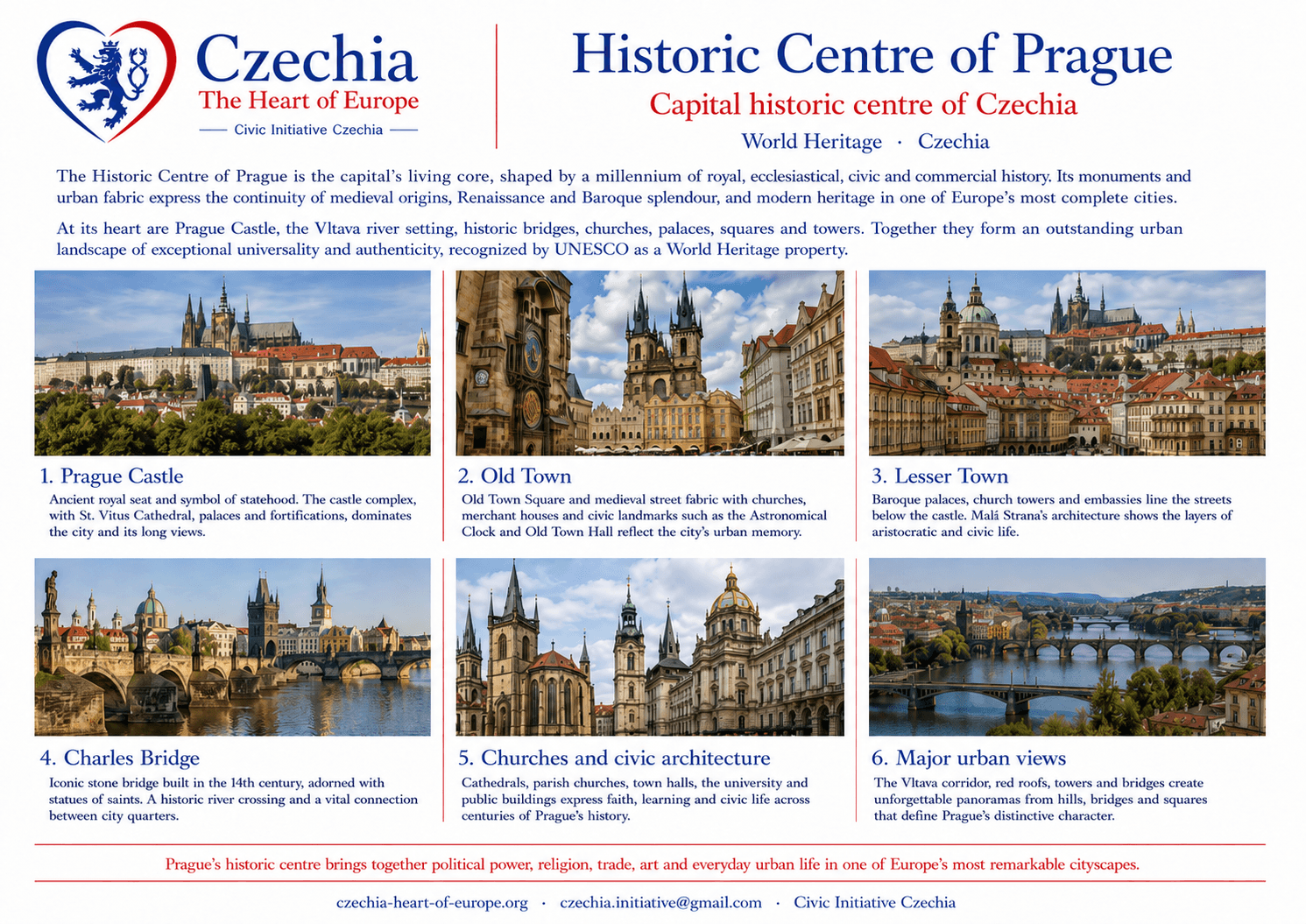
1992 · Cultural Historic Centre of Prague Best for: castle district, Old Town, Lesser Town, churches, bridges, historic urban views and layered capital-city heritage.
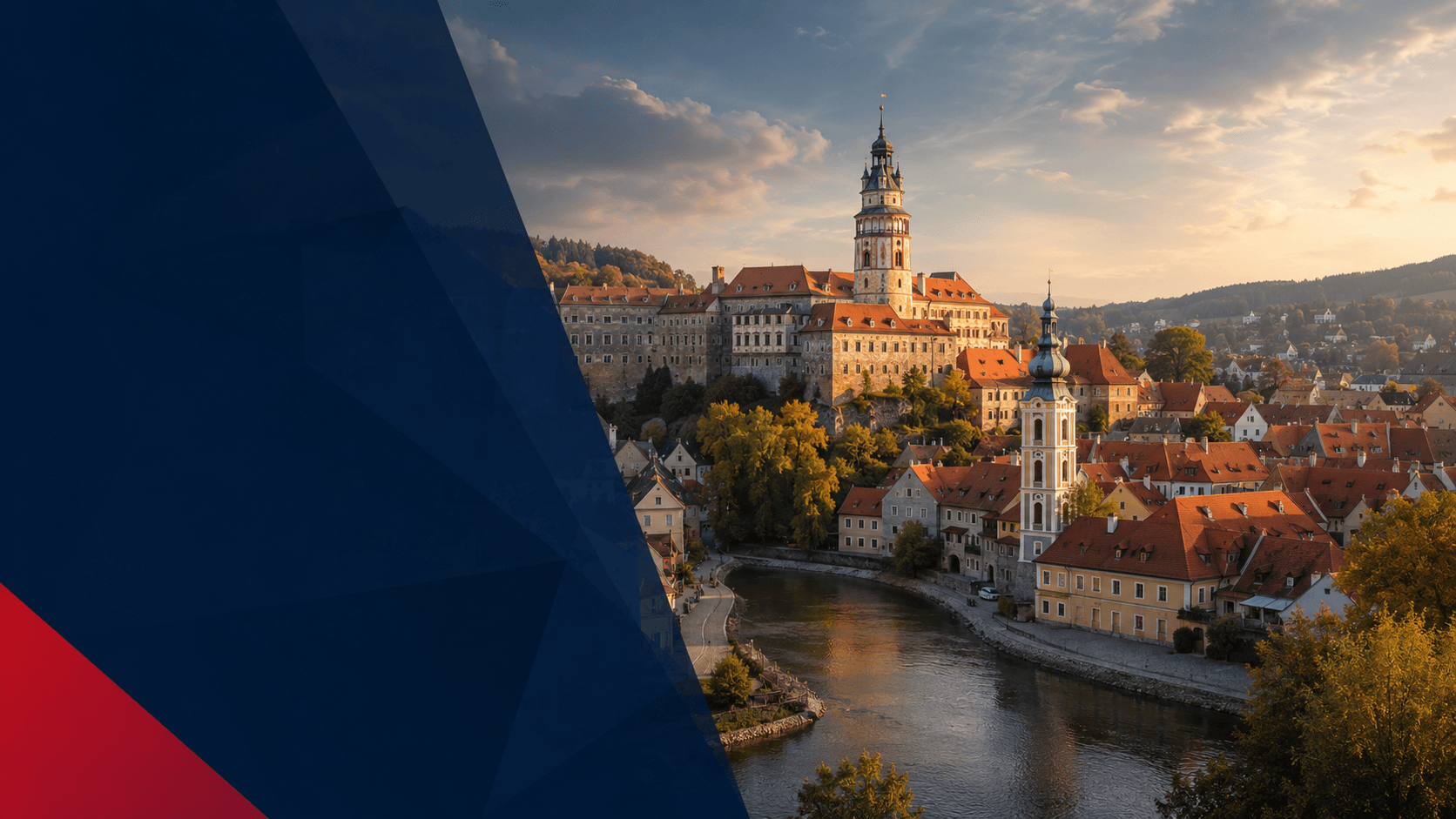
1992 · Cultural Historic Centre of Český Krumlov Best for: castle and château complex, river setting, historic streets, viewpoints and South Bohemian townscape.
1992 · Cultural Historic Centre of Telč Best for: Renaissance and Baroque town square, château context, arcaded houses and compact historic centre.
1994 · Cultural Pilgrimage Church of St John of Nepomuk at Zelená Hora Best for: Santini architecture, symbolic geometry, pilgrimage setting and a focused visit near Žďár nad Sázavou.
1995 · Cultural Kutná Hora Best for: medieval silver-mining town, Church of St Barbara, Sedlec cathedral, historic streets and mining wealth context.
1996 · Cultural Lednice-Valtice Cultural Landscape Best for: châteaux, parks, garden buildings, ponds, avenues, cycling or walking between landscape elements.
1998 · Cultural Gardens and Castle at Kroměříž Best for: archiepiscopal castle, Flower Garden, château garden, Baroque composition and Moravian residence culture.
1998 · Cultural Holašovice Historic Village Best for: South Bohemian rural settlement, Folk Baroque façades, village plan and countryside architecture.
1999 · Cultural Litomyšl Castle Best for: Renaissance château, sgraffito decoration, historic theatre, town setting and Bedřich Smetana connection.
2000 · Cultural Holy Trinity Column in Olomouc Best for: Baroque sculpture, Upper Square, Moravian urban heritage and short focused viewing in the historic centre.
2001 · Cultural Tugendhat Villa in Brno Best for: modern architecture, Mies van der Rohe design, functionalist interiors and advance reservation planning.
2003 · Cultural Jewish Quarter and St Procopius’ Basilica in Třebíč Best for: Jewish quarter, cemetery, basilica, river setting and Jewish-Christian urban history in Moravia.
2019 · Cultural · Transnational Erzgebirge/Krušnohoří Mining Region Best for: mining landscapes, industrial heritage, mountain towns and Czech-German shared mining history.
2019 · Cultural Kladruby nad Labem Best for: ceremonial carriage-horse breeding landscape, stables, pastures, designed grounds and cultural landscape planning.
2021 · Cultural · Transnational The Great Spa Towns of Europe Best for: Karlovy Vary, Mariánské Lázně and Františkovy Lázně, spa architecture, colonnades and therapeutic urban culture.
2021 · Natural · Transnational Ancient and Primeval Beech Forests Best for: natural forest heritage, protected beech ecosystems and the Czech component in the Jizera Mountains.
2023 · Cultural Žatec and the Landscape of Saaz Hops Best for: hop-growing landscape, Žatec town, hop processing, storage buildings and agricultural heritage.
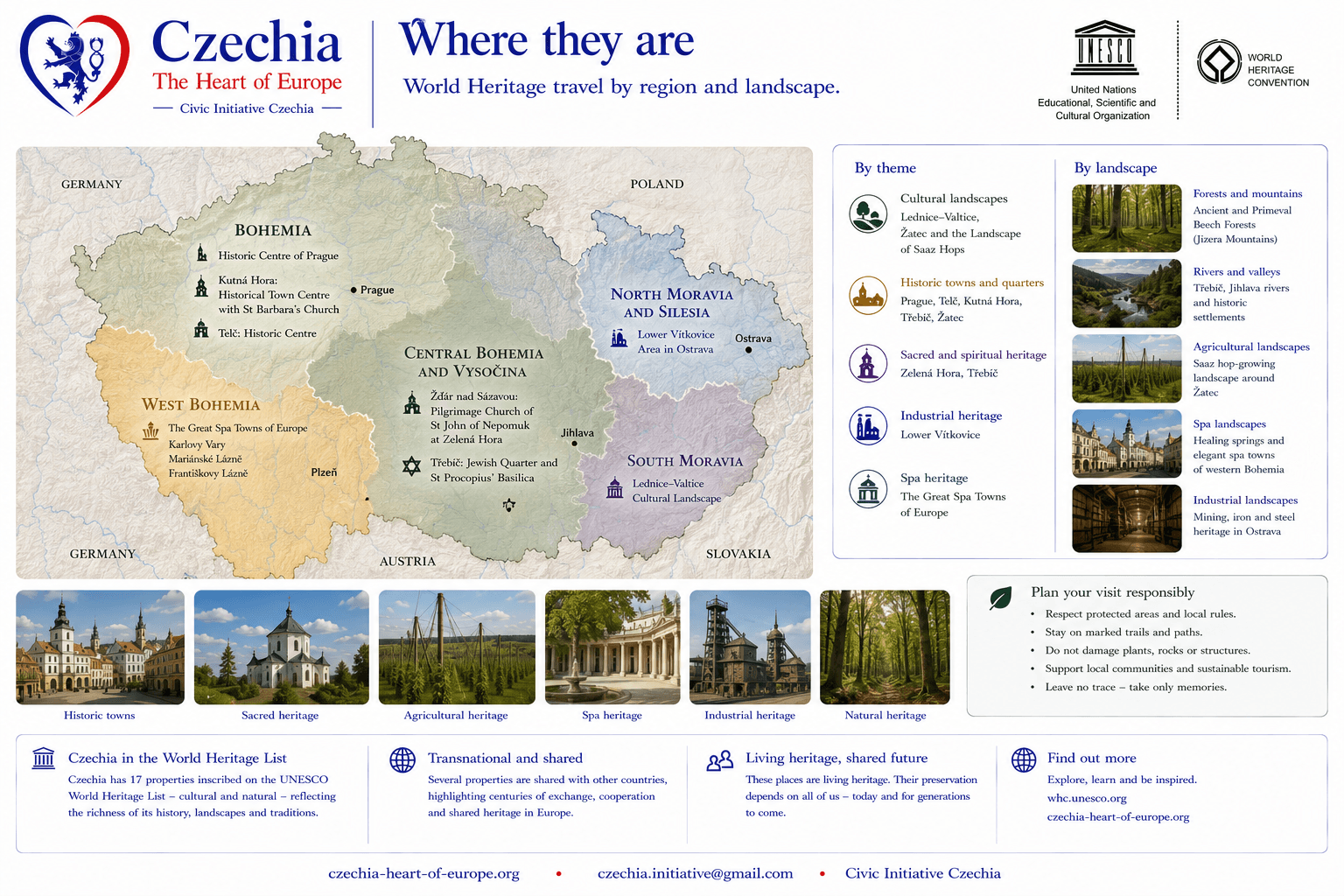
Where they are

World Heritage travel by region and landscape.

The sites are not concentrated in one part of the country. Prague, Kutná Hora, Kladruby nad Labem, Holašovice, Český Krumlov, Telč, Litomyšl, Žatec, the spa towns and the Krušnohoří mining region show strong coverage in Bohemia. Moravia is represented by Kroměříž, Olomouc, Brno, Třebíč and Zelená Hora. The natural beech forest component adds protected forest heritage in the Jizera Mountains.

Bohemia Towns, castles, spas, mining and hops Plan for Prague, Český Krumlov, Kutná Hora, Telč, Holašovice, Litomyšl, Kladruby, Žatec, spa towns and Krušnohoří.
Moravia Architecture, religion and urban heritage Kroměříž, Olomouc, Brno, Třebíč and Zelená Hora are key Moravian and Bohemian-Moravian Highlands visits.
Landscape trips More than one stop Lednice-Valtice, Kladruby, Krušnohoří, spa towns, beech forests and Žatec work best with wider area planning.

Tentative List

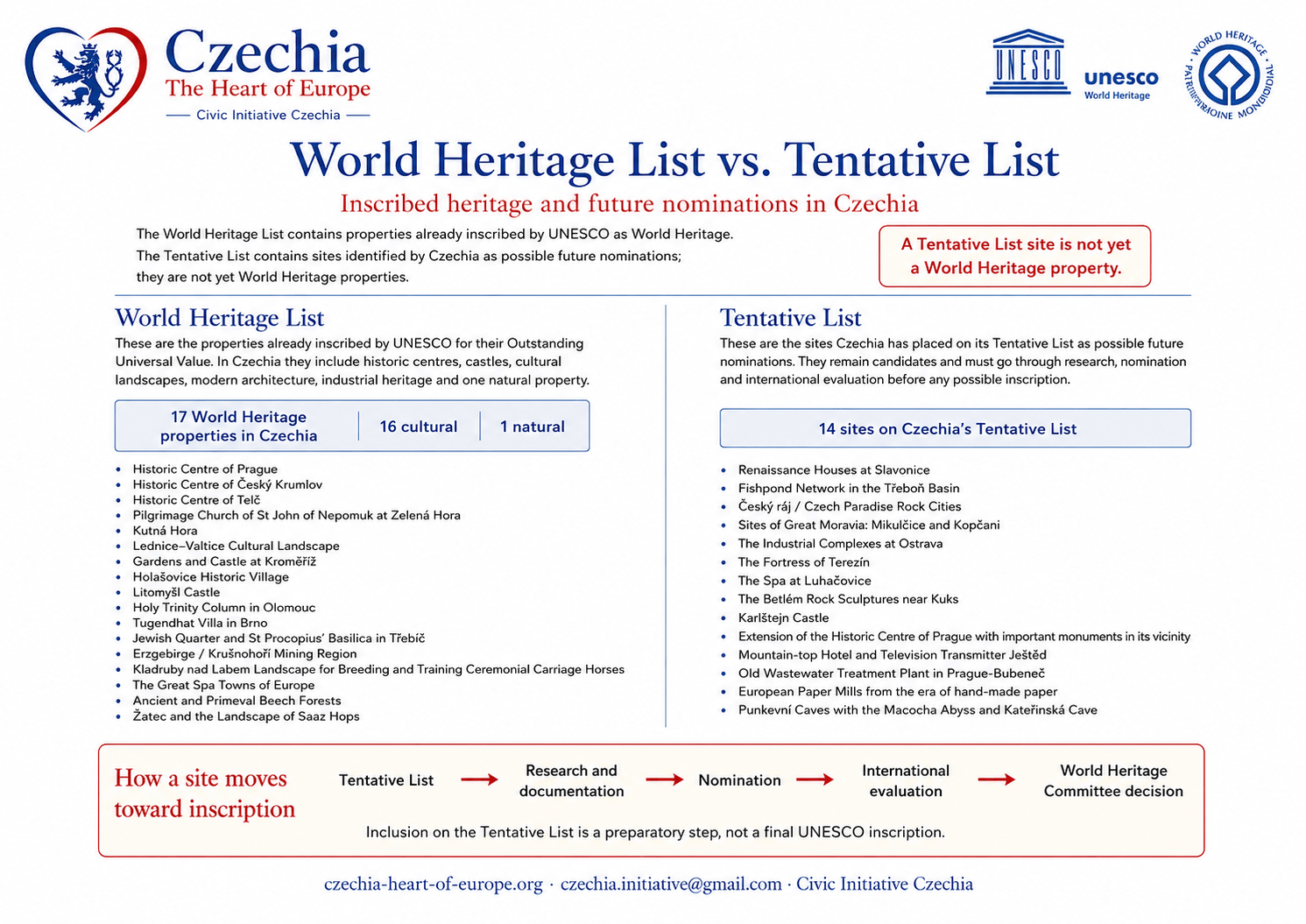
World Heritage List and Tentative List are different.

A property on the Tentative List is not yet World Heritage. It is a possible future nomination. This distinction matters for visitors, media captions, school materials and public communication. Czechia’s Tentative List includes sites such as Karlštejn Castle, Terezín Fortress, Ještěd, Český ráj rock cities, the Třeboň fishpond network, Great Moravia sites, industrial Ostrava, Luhačovice, Slavonice, the Old Wastewater Treatment Plant in Prague-Bubeneč, European paper mills and the Punkevní Caves with Macocha Abyss and Kateřinská Cave.

Inscribed List Already World Heritage These are the 17 properties formally inscribed for Czechia by UNESCO.
Tentative List Possible future nominations These places may be considered for nomination, but they are not automatically UNESCO World Heritage.
Visitor use Label sites accurately Use “Tentative List” for candidates and “World Heritage” only for formally inscribed properties.

Official references

Primary reference pages.

Use the UNESCO and National Heritage Institute pages for official names, inscription status, maps, documentation and conservation information. Use individual town or monument websites for current visiting conditions.