Czechia’s cities and towns form a dense network of regional centres, historic cores, university cities, spa towns, industrial centres and smaller service towns. They connect public administration, transport, education, culture, markets, civic buildings and everyday local life.
Urban Czechia through function, scale and local identity.
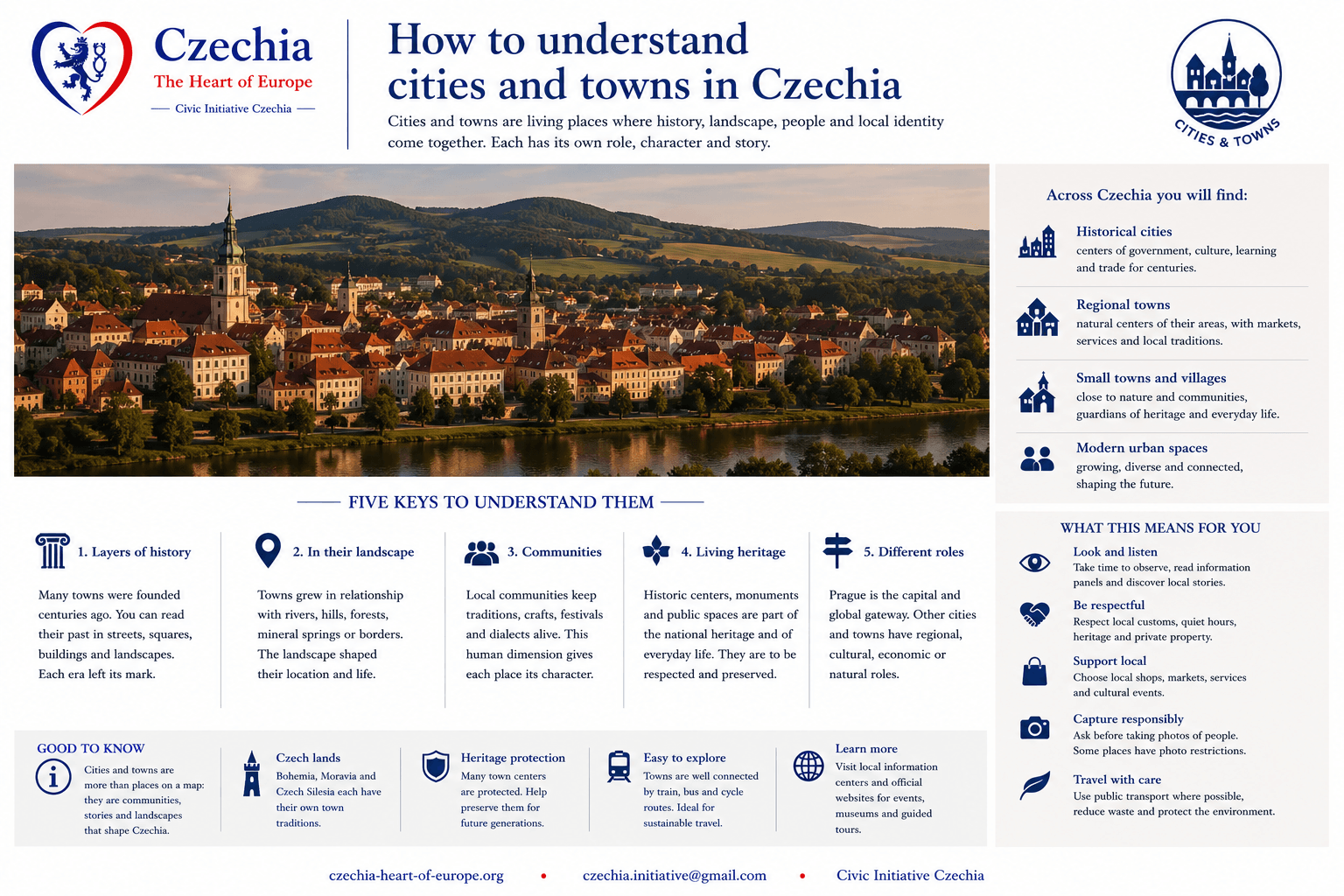
Czechia’s urban network is not limited to large cities. Regional capitals, historic towns, spa towns, industrial centres, university cities and smaller local service towns all play distinct roles. Together they organize access to offices, hospitals, schools, transport, cultural institutions, shops, markets and public events.
A Czech town is usually understood through its centre: main square, town hall, church, station, river, park, civic buildings and surrounding neighbourhoods. Larger cities add districts, universities, specialised institutions and wider transport systems. Smaller towns often reveal local identity more directly through their square, museum, market, festival calendar and landscape setting.
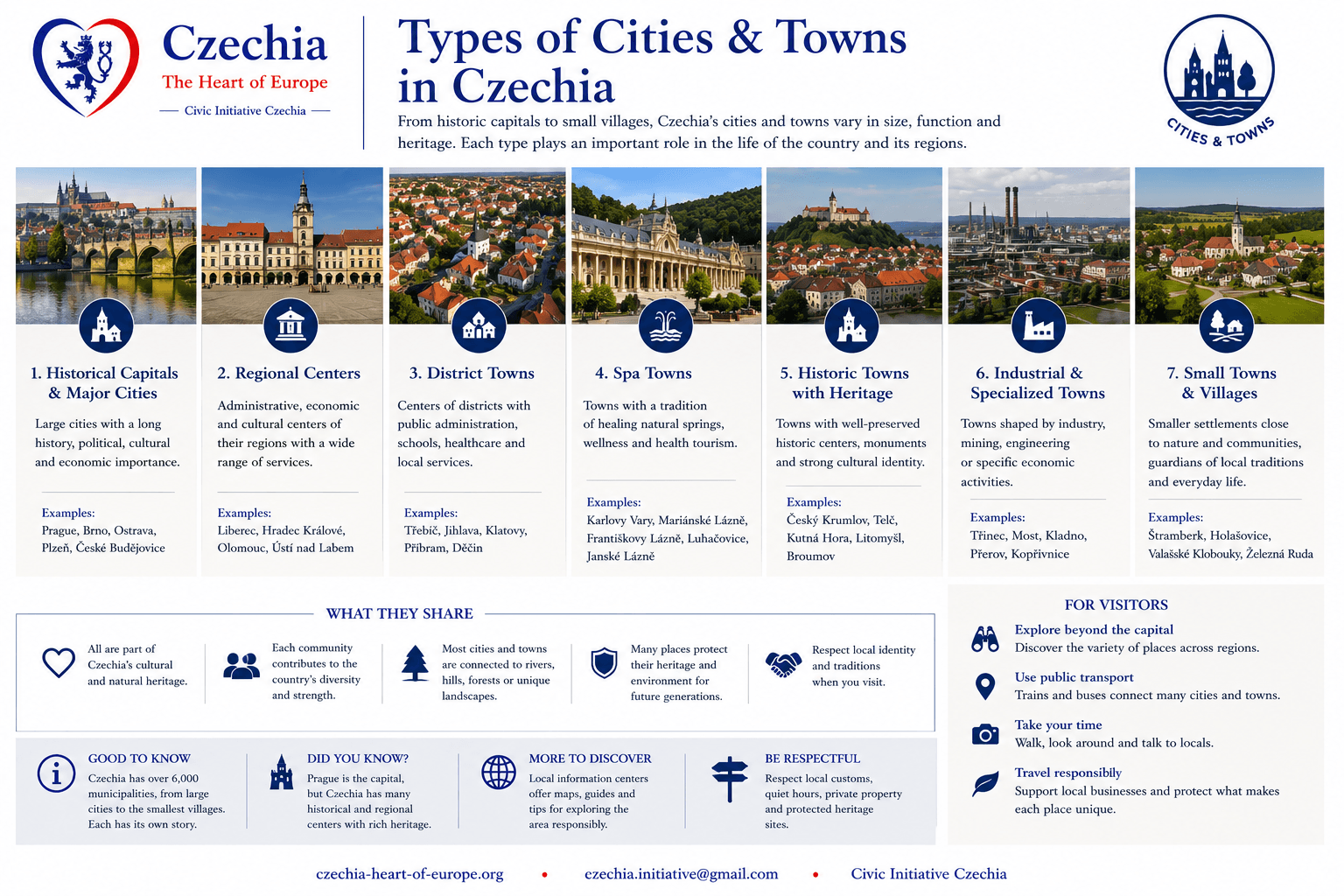
Towns often combine more than one role. A historic town can also be a university town; a regional centre can also be an industrial city or spa destination. The categories below help identify the main urban functions visitors and residents encounter.
Regional capitals
Administration and servicesRegional offices, hospitals, universities, cultural institutions, courts, transport links and shopping districts.
Historic towns
Squares and preserved centresMain squares, arcades, churches, town halls, walls, burgher houses and compact street patterns.
University cities
Education and researchCampuses, libraries, student services, research institutions, cafés and cultural life.
Industrial cities
Production and transformationFactories, railways, worker districts, technical heritage, brownfield renewal and innovation zones.
Spa towns
Health, parks and promenadesMineral springs, colonnades, spa houses, gardens, hotels and cultural seasons.
Local service towns
Everyday regional supportSchools, offices, clinics, markets, shops, sports grounds, transport stops and public meeting places.
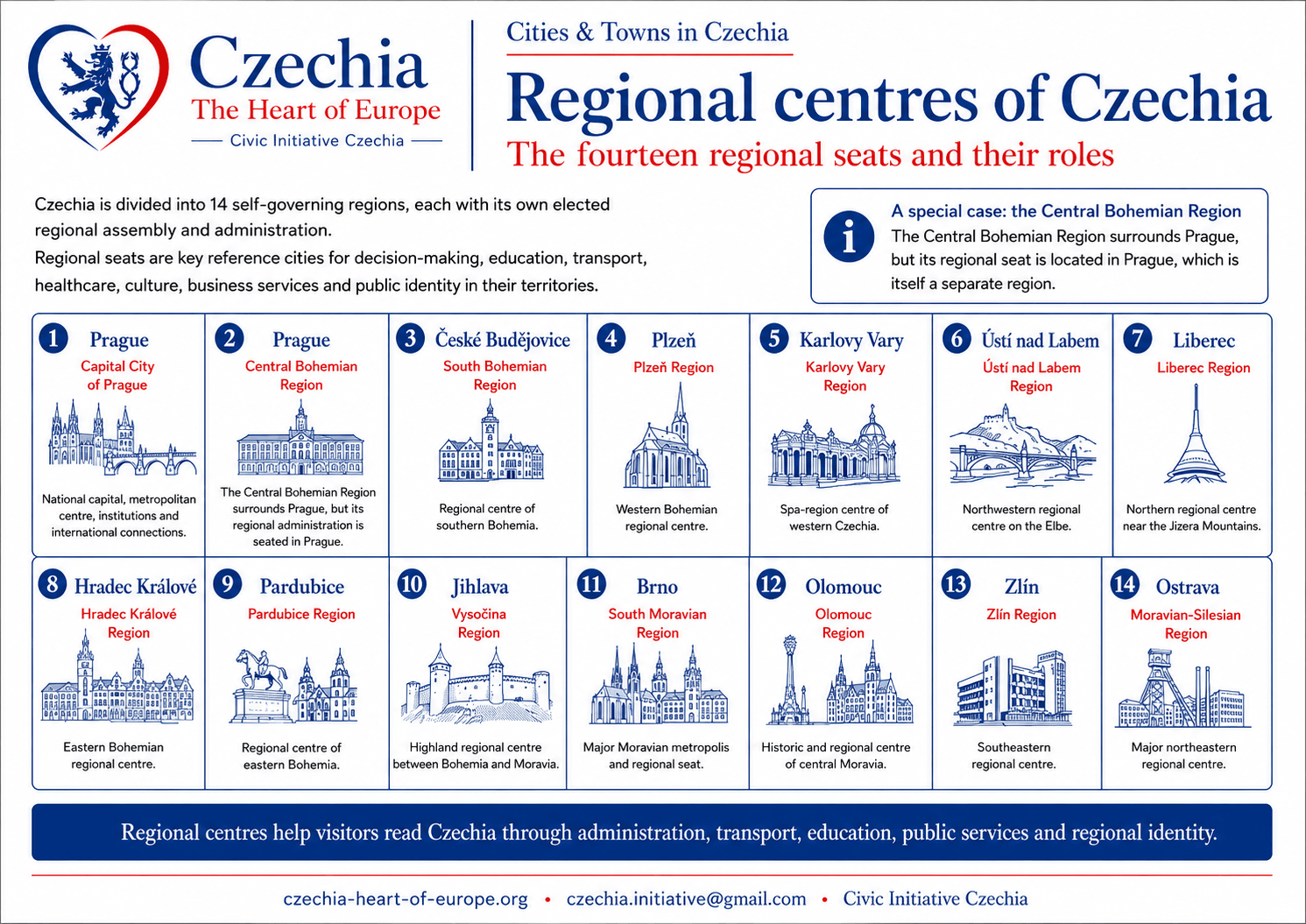
Regional cities concentrate services for wider areas.
Regional centres serve people from surrounding districts and smaller towns. They usually hold the main administrative, medical, educational, cultural and transport infrastructure of their region. For visitors, they are practical bases for reaching nearby towns, heritage sites, natural areas and events.
Institutions
Administration, health and educationRegional offices, hospitals, courts, schools and universities often serve a much larger area than the city itself.
Mobility
Stations and public transportRailway stations, bus terminals, trams, trolleybuses and urban buses shape access to the city and region.
Culture
Museums, theatres and eventsRegional cities usually carry the strongest cultural infrastructure outside the capital.
A compact sequence of major and representative urban centres: capital city, Moravian metropolis, industrial centre, regional capitals, spa city, planned modern city and historic town.
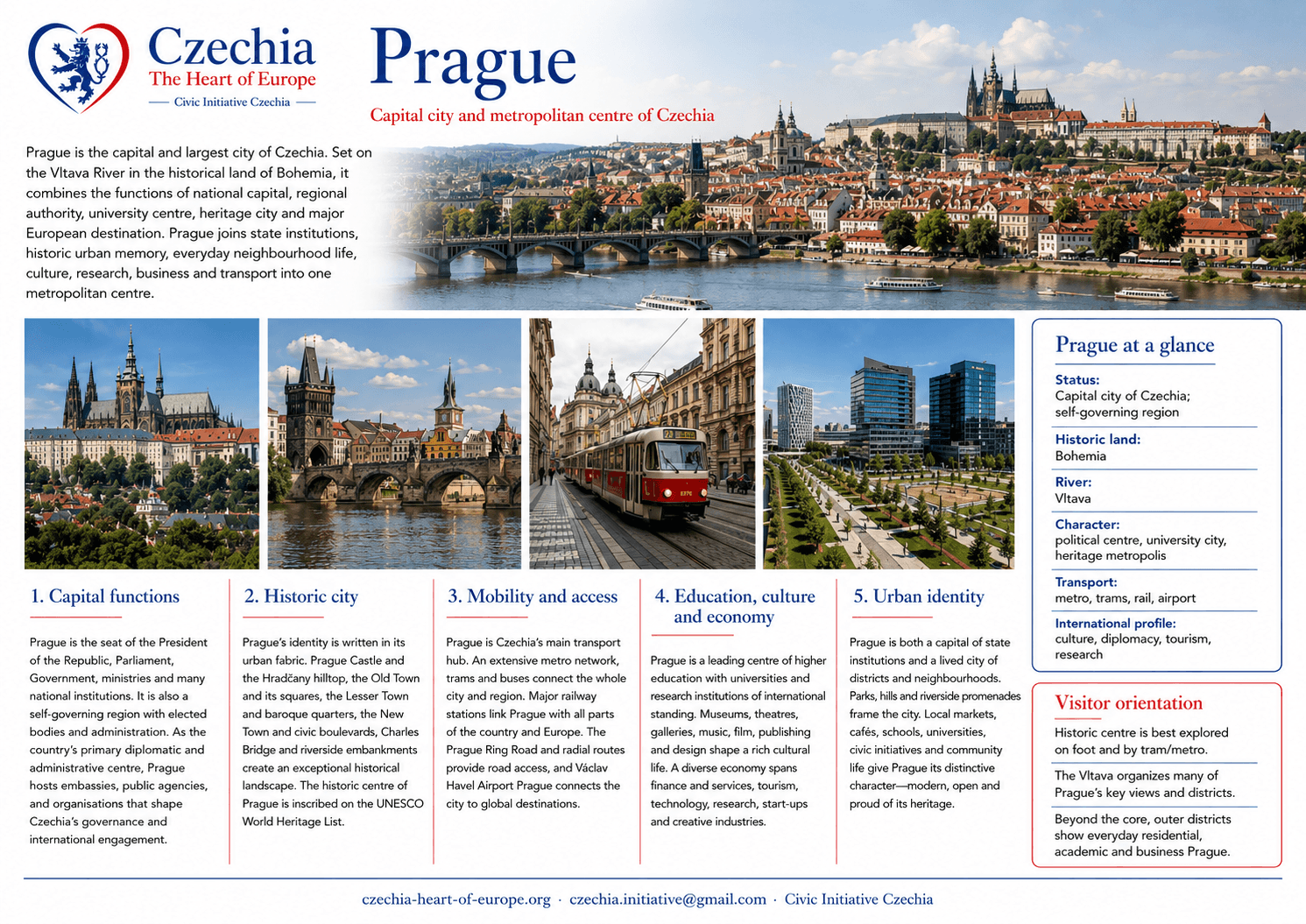
Prague
Capital city, largest urban centre and national gateway for institutions, transport, culture, universities and international visitors.
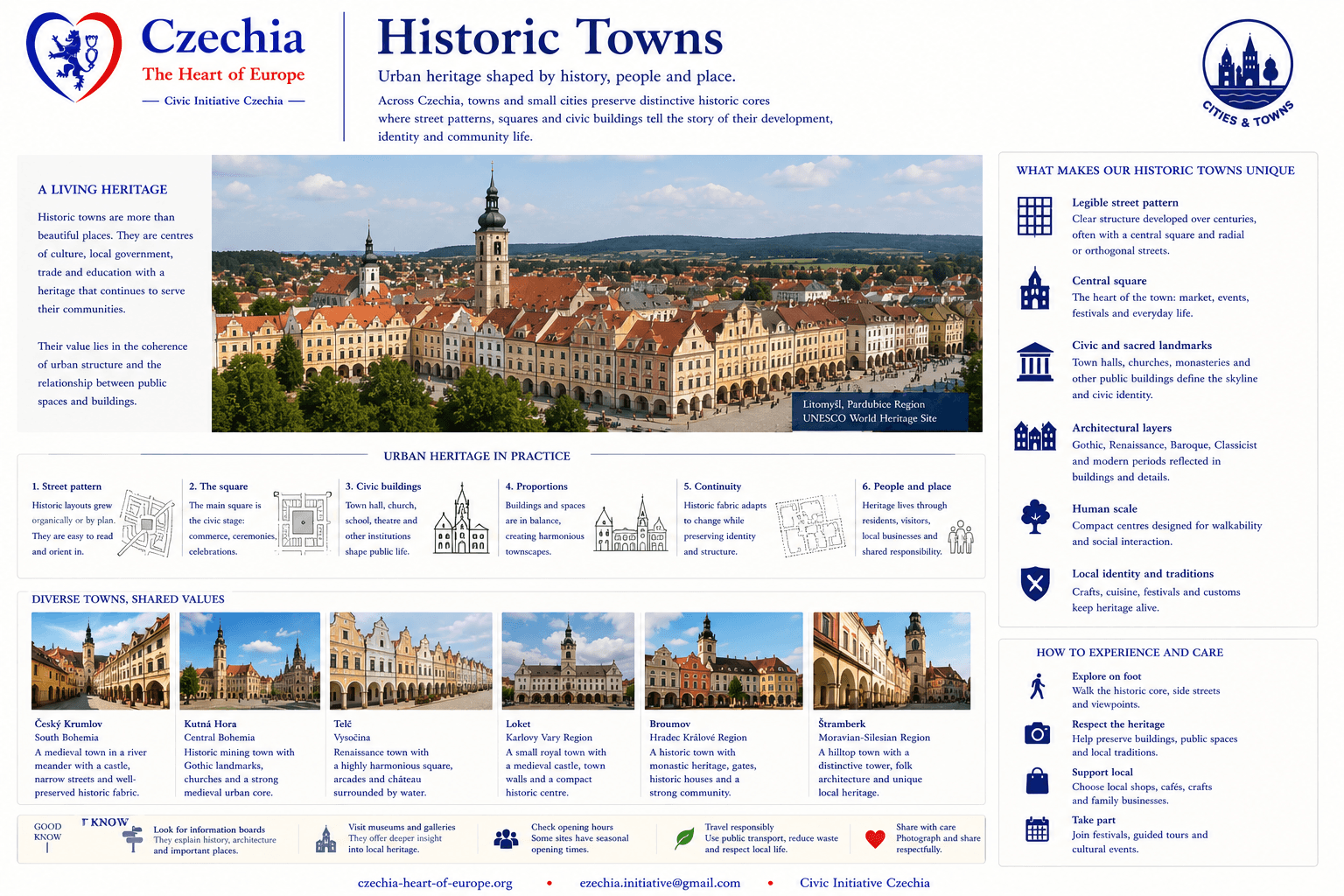
Historic centres preserve civic memory in compact form.
Many Czech towns keep a legible historic core. The main square gives the clearest orientation: town hall, church, arcades, fountains, plague column, market memory, burgher houses and streets leading to gates, bridges, castles or rivers. Smaller towns are especially useful for seeing how civic identity, trade, craft, religion and local administration shaped everyday urban space.
Main square
Market and meeting placeThe square often preserves the town’s commercial, civic and ceremonial centre.
Civic buildings
Town hall, church and schoolPublic authority, religious life and education shaped the most visible buildings in many town centres.
Urban edges
Gates, bridges, rivers and wallsHistoric approaches show how the town related to movement, trade, defence and surrounding villages.
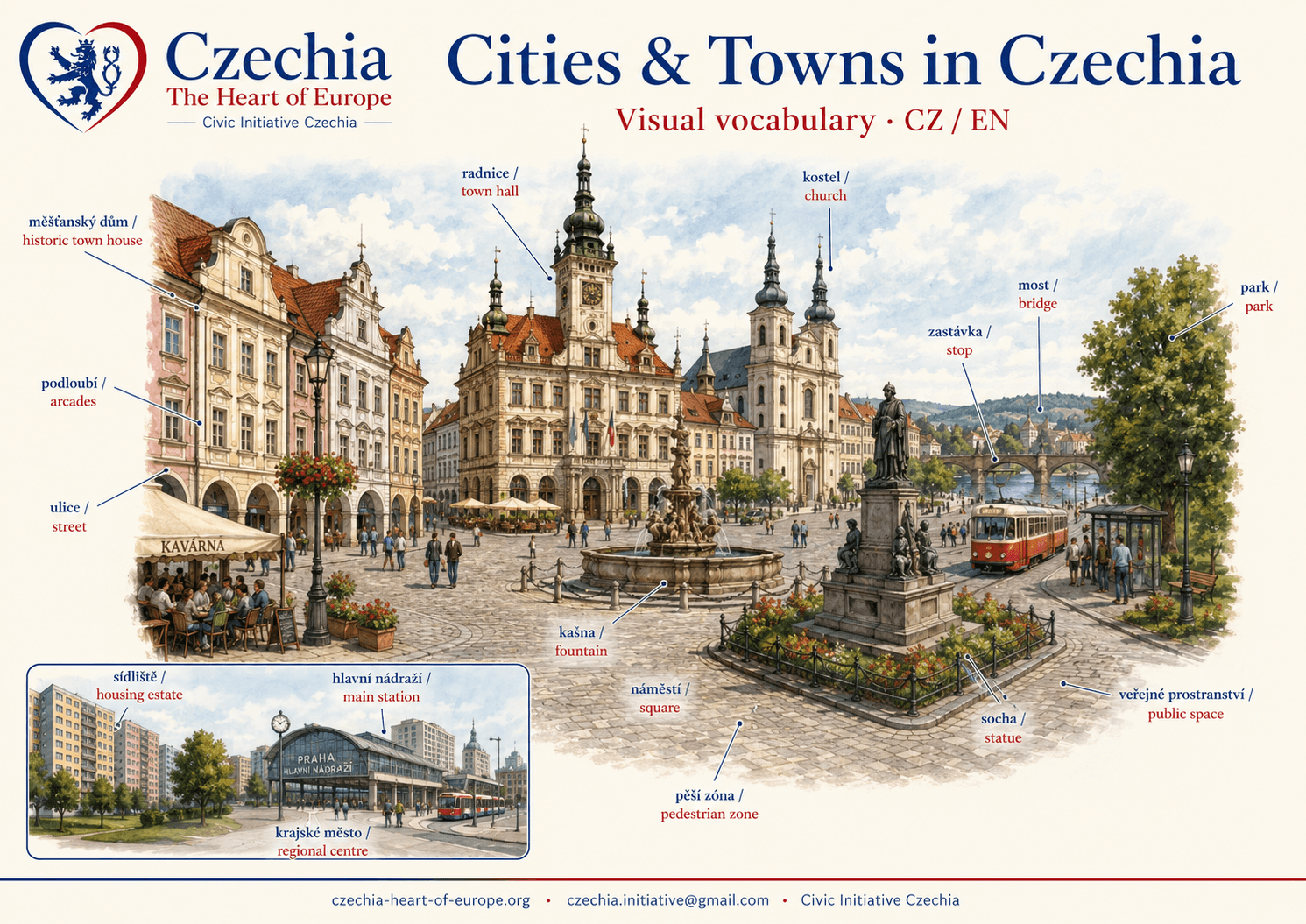
Squares, stations, parks and riverfronts shape the urban experience.
Public spaces reveal how a city or town functions at street level. The main square concentrates civic life, markets, ceremonies and meeting points. Stations and transport stops define arrival and connection. Parks, riverfronts, libraries, cultural houses, sports grounds and cafés show where everyday life continues beyond offices, monuments and institutions.
Squares
Civic centreMain squares concentrate markets, town halls, cafés, public events, fountains, benches and meeting points.
Stations
Arrival and connectionRailway stations, bus terminals and public transport stops define the first practical contact with a town.
Parks
Urban comfortParks provide shade, walking space, family time, events, rest and contact with greenery inside the town.
Riverfronts
Water and town formRivers, bridges, quays and mills often explain settlement position, movement and visual character.
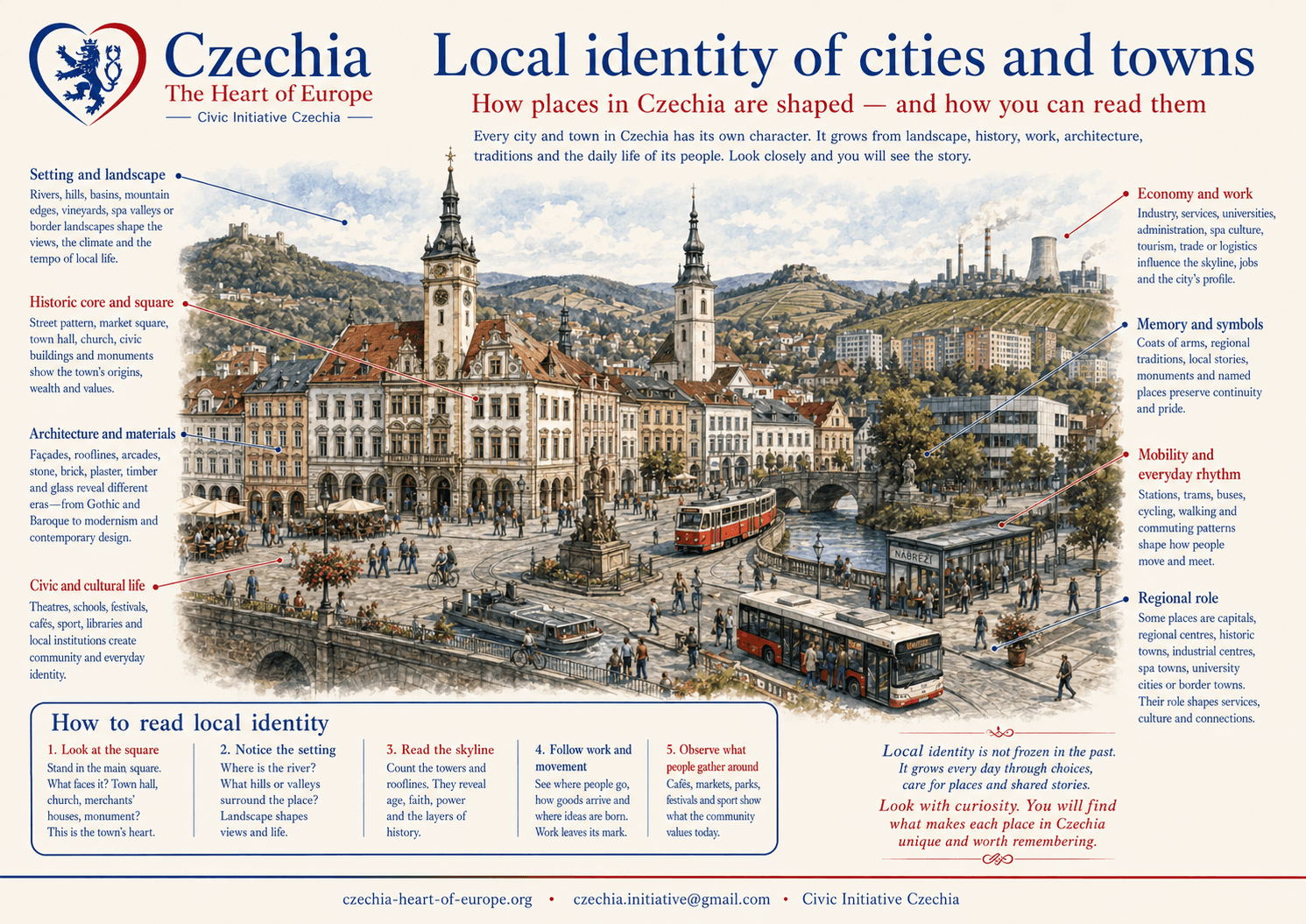
Local character comes from work, culture, setting and memory.
Each Czech town has its own combination of industries, schools, rivers, hills, markets, festivals, sports clubs, food traditions, architecture and regional memory. Visitors can usually recognize this character through the town museum, cultural calendar, public signage, information centre, local events, cafés, markets and the way the town presents its surroundings.
Economy
Work and local reputationGlassmaking, brewing, engineering, textiles, spa services, food production, education or technology often shape how a town is known.
Culture
Events and institutionsMuseums, theatres, festivals, libraries, galleries, choirs and sports clubs keep local life visible throughout the year.
Setting
Landscape and positionA river, hill, basin, borderland or transport corridor often explains the town’s growth, layout and visual character.
Use municipal, regional, heritage and tourism pages for current visitor information, public services, opening hours, events, protected urban areas and transport details.