Celts, Germanic Peoples and Slavic Settlement

History · Names and peoples

Celts, Germanic Peoples and Slavic Settlement

The Boii, Germanic peoples and early Slavic communities belong to the deep historical layer behind Bohemia, Moravia and the formation of the medieval Czech lands.

Names and peoples

Early layers behind later Czech history

The period between late prehistory and early medieval settlement brings the Czech lands into a clearer European frame. Celtic, Germanic and Slavic layers left names, archaeological evidence, settlement traces and cultural memory across Bohemia, Moravia and the wider Central European borderlands.

The Boii are especially important because their name is linked with Bohemia. Germanic groups such as the Marcomanni and Quadi belong to the Roman-period history of the region. Later Slavic settlement prepared the social and linguistic ground from which early medieval Moravia, Bohemia and Czech statehood would develop.
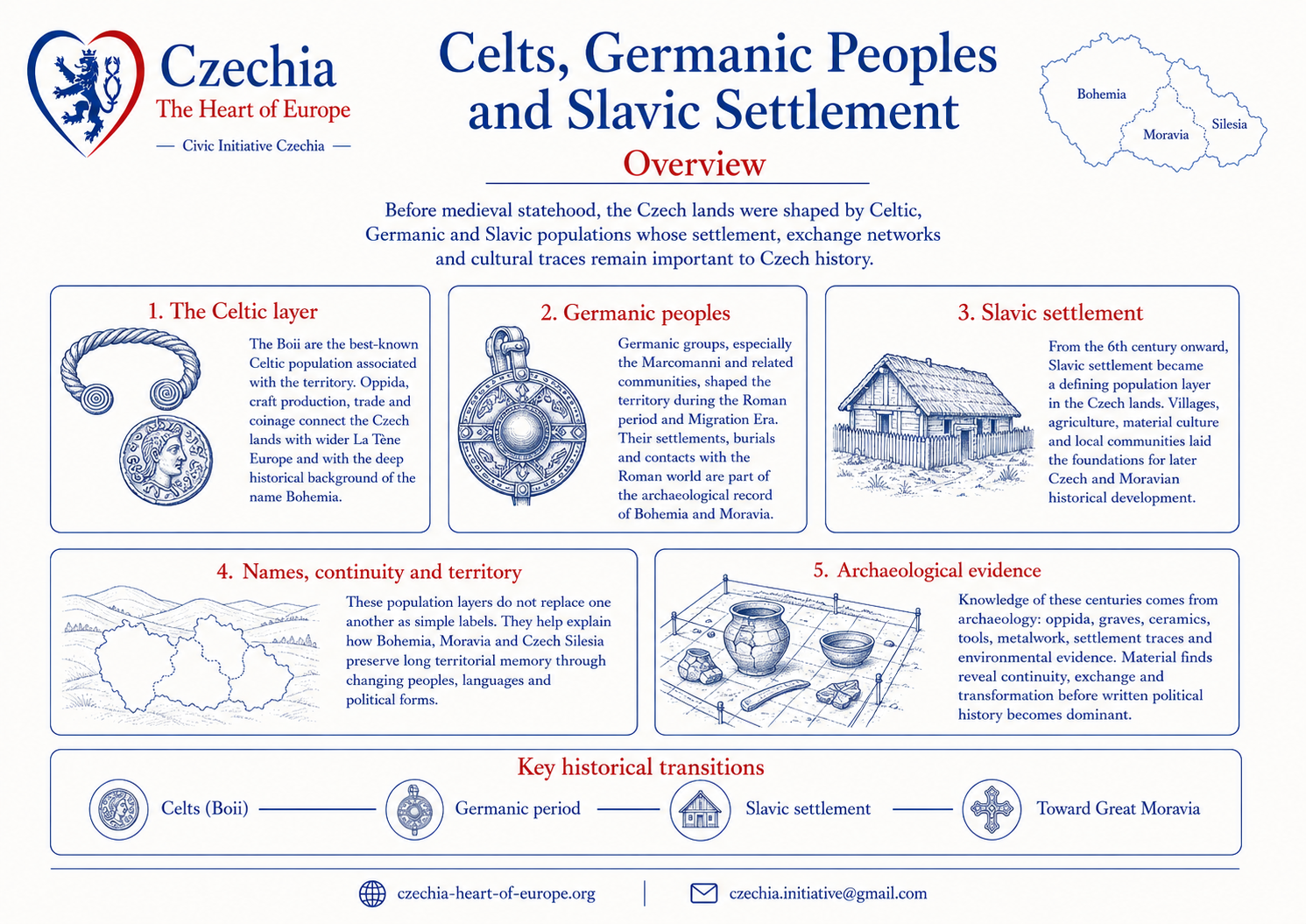
Celts, Germanic Peoples and Slavic Settlement overview information sheet

Fast orientation

This period explains how names, peoples and settlement layers entered the historical landscape before stable medieval institutions. It connects archaeology with later identity: Bohemia preserves the memory of the Boii; Moravia becomes central in early Slavic state formation; Slavic settlement gives the region the linguistic basis from which Czech developed.

Boii and BohemiaThe Celtic Boii are connected with the historical name Bohemia and with the La Tène cultural horizon.
Germanic presenceMarcomanni, Quadi and related groups place the region inside the Roman-period history of Central Europe.
Slavic settlementEarly Slavic communities transformed the linguistic and social base of Bohemia and Moravia.
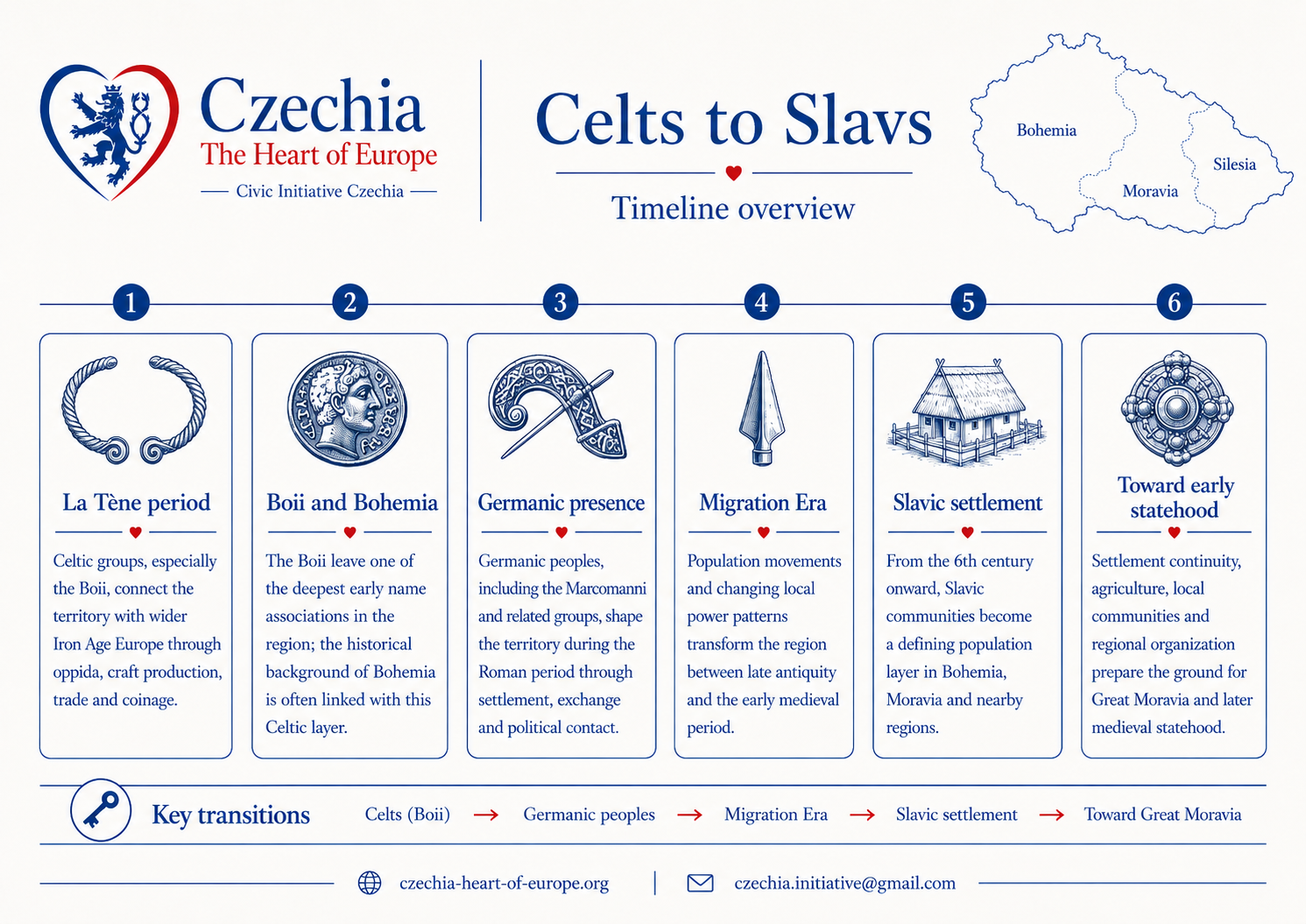
Celts to Slavs horizontal timeline

Timeline in one view

Iron AgeHallstatt and La Tène horizons connect the Czech lands with wider Central European craft, exchange, elite centres and fortified sites.
Celtic BoiiThe Boii become the key Celtic name associated with Bohemia and with the memory of the land in later geographical language.
Roman periodGermanic groups, including Marcomanni and Quadi, place Bohemia and Moravia in contact with the Roman frontier world.
Migration eraPopulation movement, changing power structures and archaeological horizons reshape the Central European landscape.
Early SlavsSlavic communities settle across Bohemia and Moravia, creating the linguistic and cultural ground of later Czech history.
Before MoraviaThe early Slavic landscape prepares the conditions for Great Moravia, Christianisation and the first stronger medieval political formations.

Boii, Bohemia and Celtic memory

A name with long historical force

The Celtic Boii belong to the most visible pre-medieval names connected with the Czech lands. Their presence is remembered through the name Bohemia, which became one of the strongest historical designations for the western Czech land. The Celtic layer also belongs to the archaeology of fortified centres, craft production, trade contacts and wider La Tène culture.

BohemiaThe name preserves a deep historical memory attached to the land before medieval Czech statehood.
La Tène cultureCeltic material culture connects the region with craft, ornament, exchange and elite settlement across Central Europe.

Germanic peoples and the Roman-period frontier world

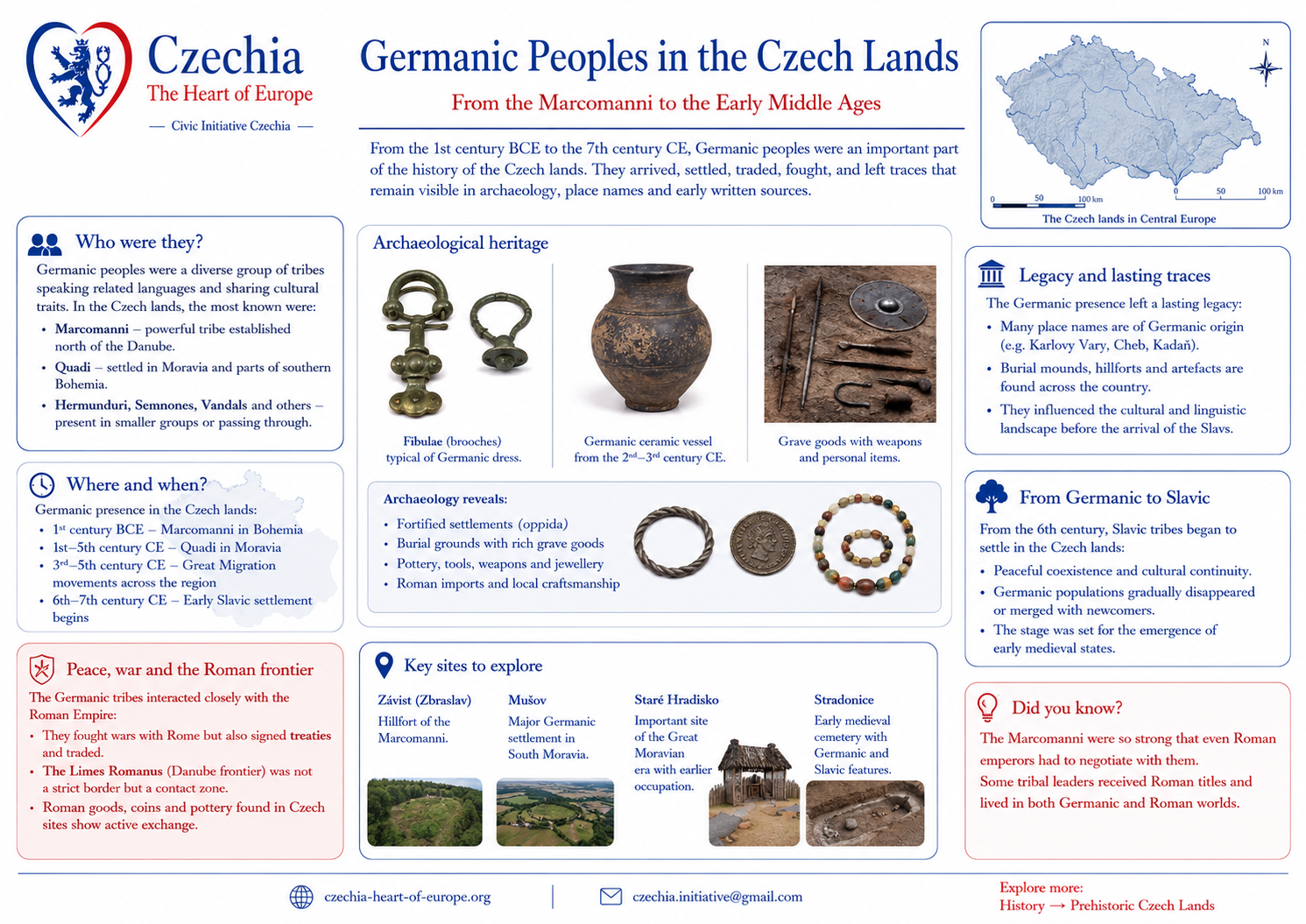
After the Celtic layer, Germanic groups became important in the Roman-period history of Bohemia and Moravia. The Marcomanni and Quadi are central names for this phase. Their presence links the Czech lands to the wider story of the Roman Empire, frontier diplomacy, conflict, exchange and shifting power across Central Europe.

MarcomanniA Germanic people strongly associated with Bohemia and with Roman-period political and military history.
QuadiA Germanic people linked especially with Moravia and neighbouring Danubian regions.
Roman contactsObjects, trade, diplomacy and conflict connect the region with the Roman frontier zone.
Landscape controlSettlements, movement corridors and river zones remained important for power and communication.
Germanic peoples in the Czech lands information sheet

Slavic settlement and the early Czech landscape

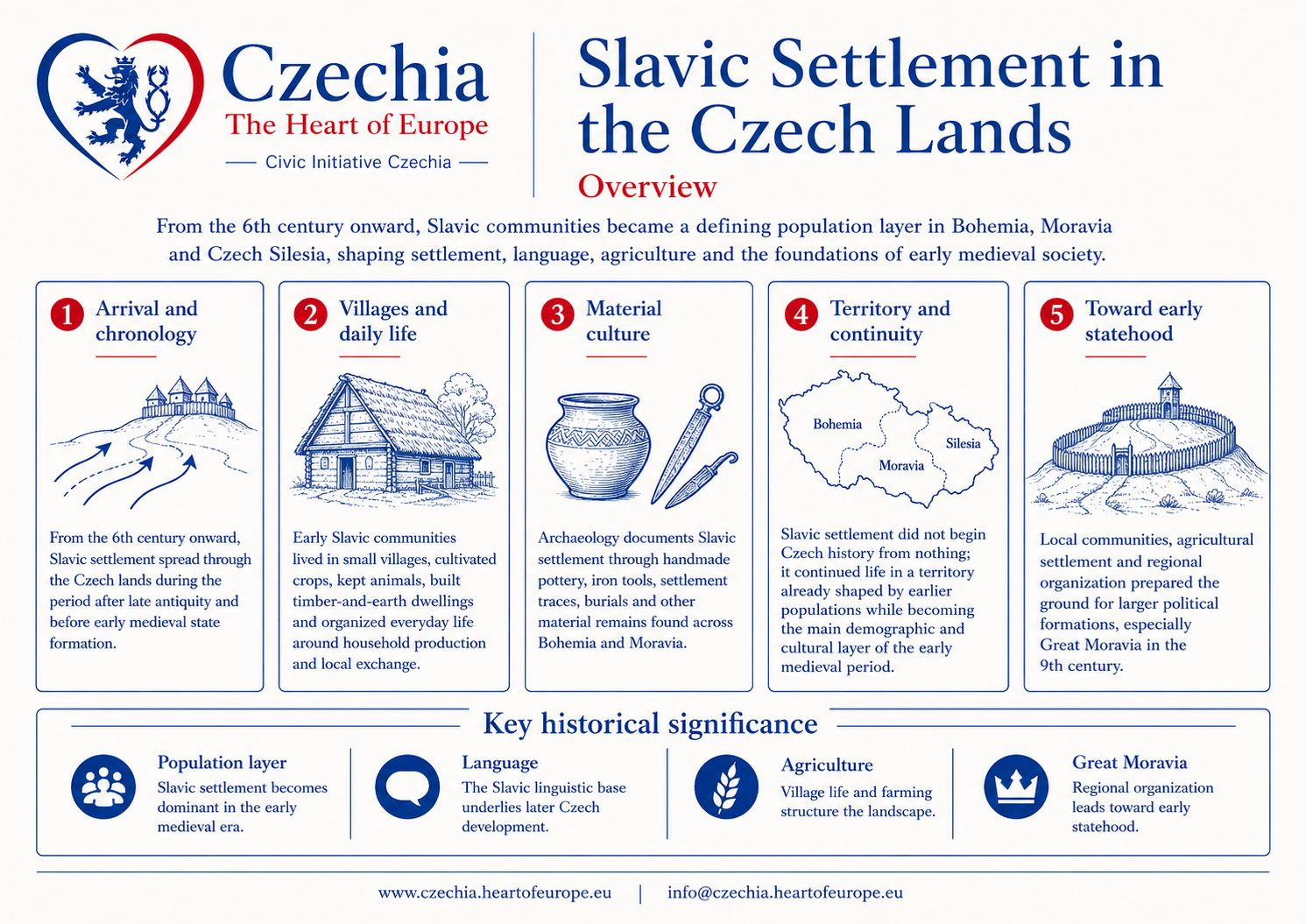
Slavic settlement gave Bohemia and Moravia the linguistic and social base of later Czech history. Villages, burial sites, fortified places and material culture show communities rooted in the land before the stronger political structures of Great Moravia and Přemyslid Bohemia. This layer is decisive for the emergence of Czech language, Czech names and the medieval communities that became historically recognisable as Czech.

BohemiaSlavic settlement prepared the western land for the later Přemyslid centre around Prague.
MoraviaMoravia became a major early medieval centre before and during the Great Moravian period.
LanguageThe Slavic layer forms the deep linguistic basis from which Czech developed.
HillfortsFortified places show organisation, defence and emerging centres of local power.
Slavic settlement in Bohemia and Moravia information sheet

Why this period matters for Czechia

This period explains why Czech history cannot begin only with medieval dynasties. The names and peoples before Great Moravia and Přemyslid Bohemia gave the Czech lands their early European setting. Celtic Bohemia, Germanic Central Europe and Slavic settlement together form the historical background through which later Czech statehood, language and land identity become understandable.