Living Prague — Mobility, River, Parks and Urban Form

Life · Prague

Living Prague — Mobility, River, Parks and Urban Form

Prague is a lived capital shaped by transport, the Vltava River, bridges, green spaces, protected nature, relief and everyday metropolitan services.

Metro and tramspublic transport backbone
Vltava cityriver, bridges and islands
Green capitalparks, forests and valleys
Healthcaremajor hospitals and research

Living city

Prague works because landscape and infrastructure work together.

The city’s everyday form is shaped by river corridors, bridges, metro lines, tram routes, railway stations, parks, wooded slopes, hospitals, universities and neighbourhood centres. These systems make Prague a functioning capital as well as a historic city.
Public transport

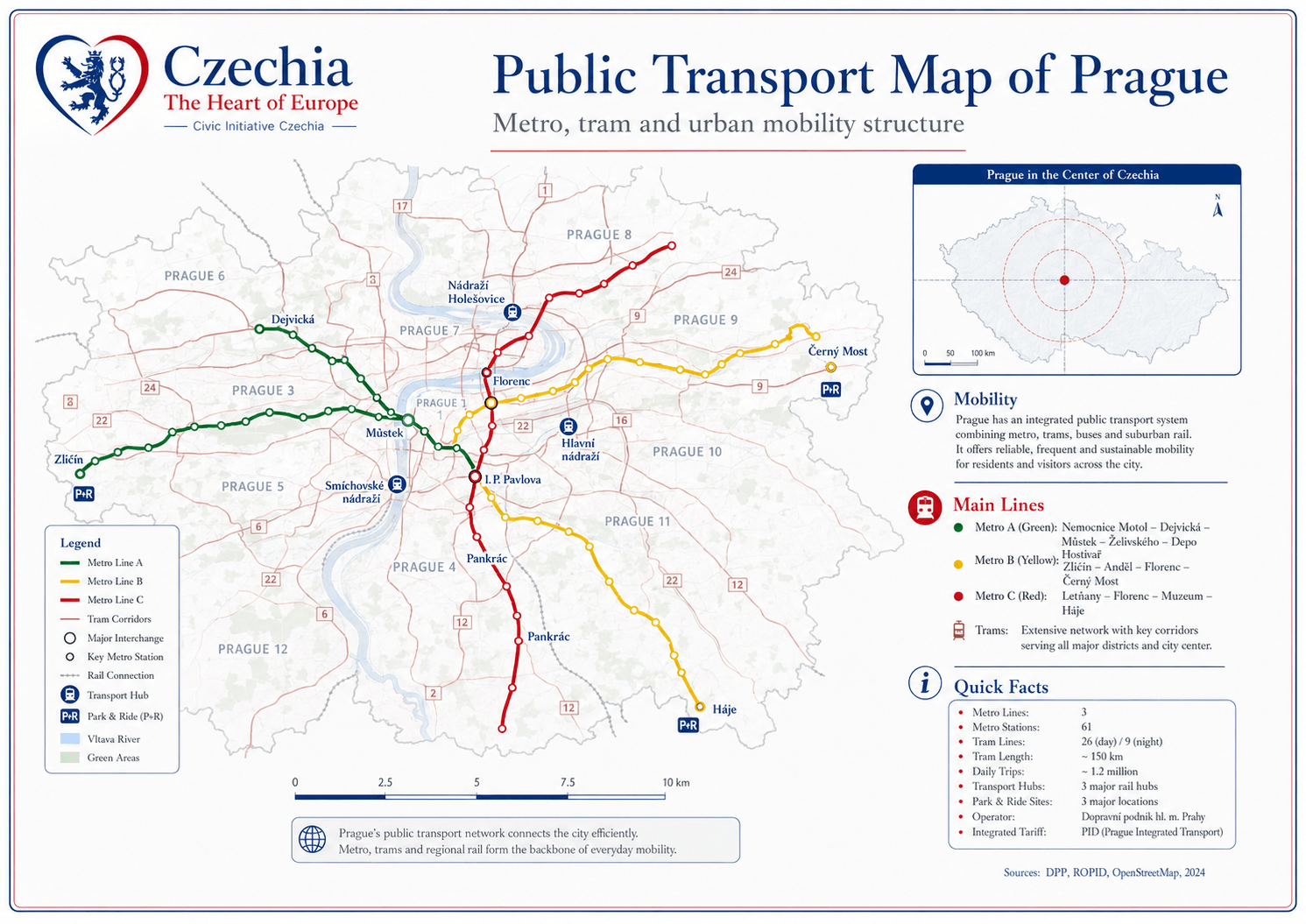
Metro, trams and urban mobility give Prague its daily rhythm.

Prague’s public transport system connects the historic centre with outer districts, business zones, universities, hospitals and surrounding commuter areas. Metro lines provide rapid movement, while trams and buses create a fine-grained network across the city.

MetroThree core lines shape cross-city mobility.
TramsA dense network connects districts and cultural corridors.
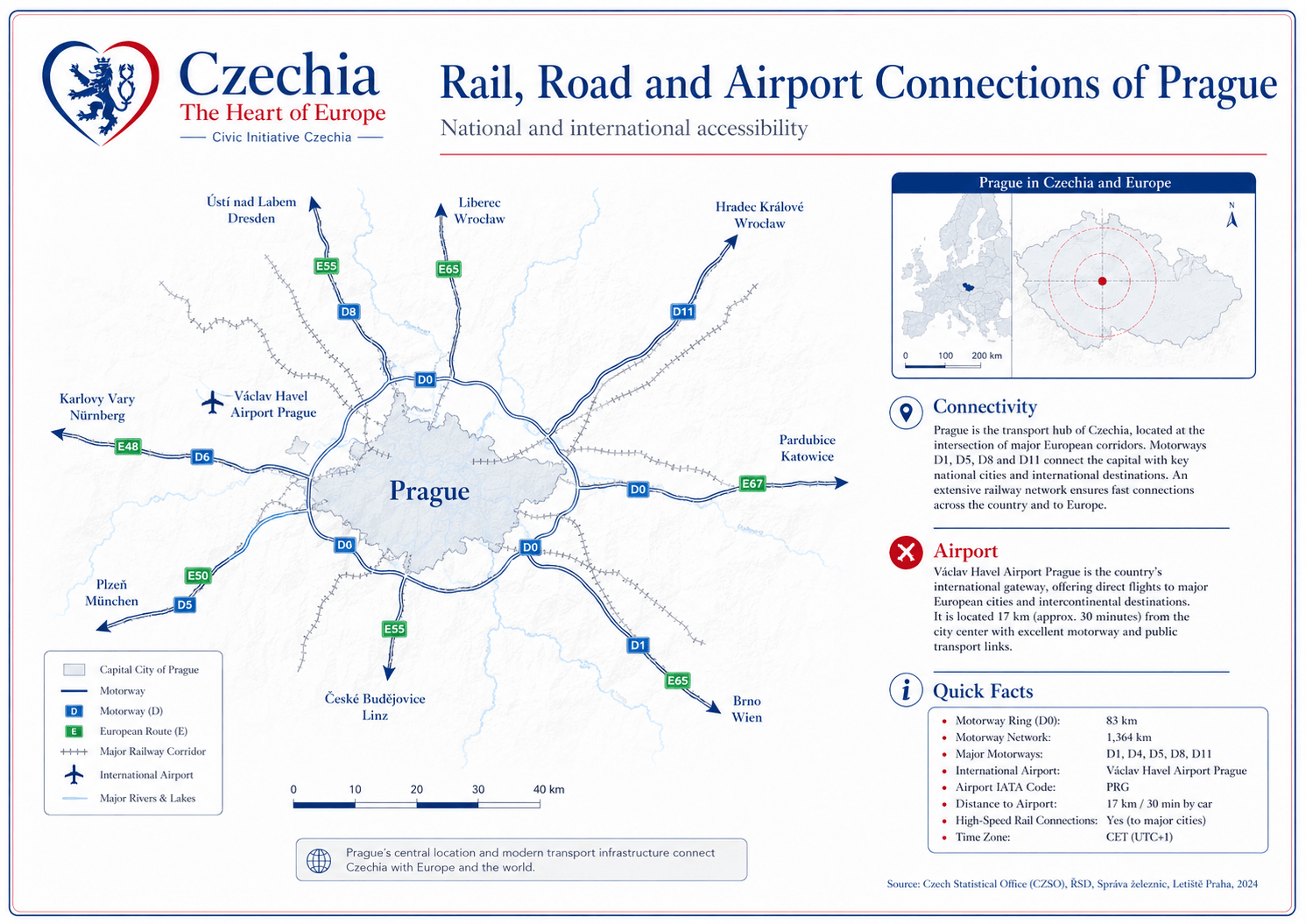
Integrated systemPublic transport links Prague with the surrounding regional network.
Public transport map of Prague

Vltava city

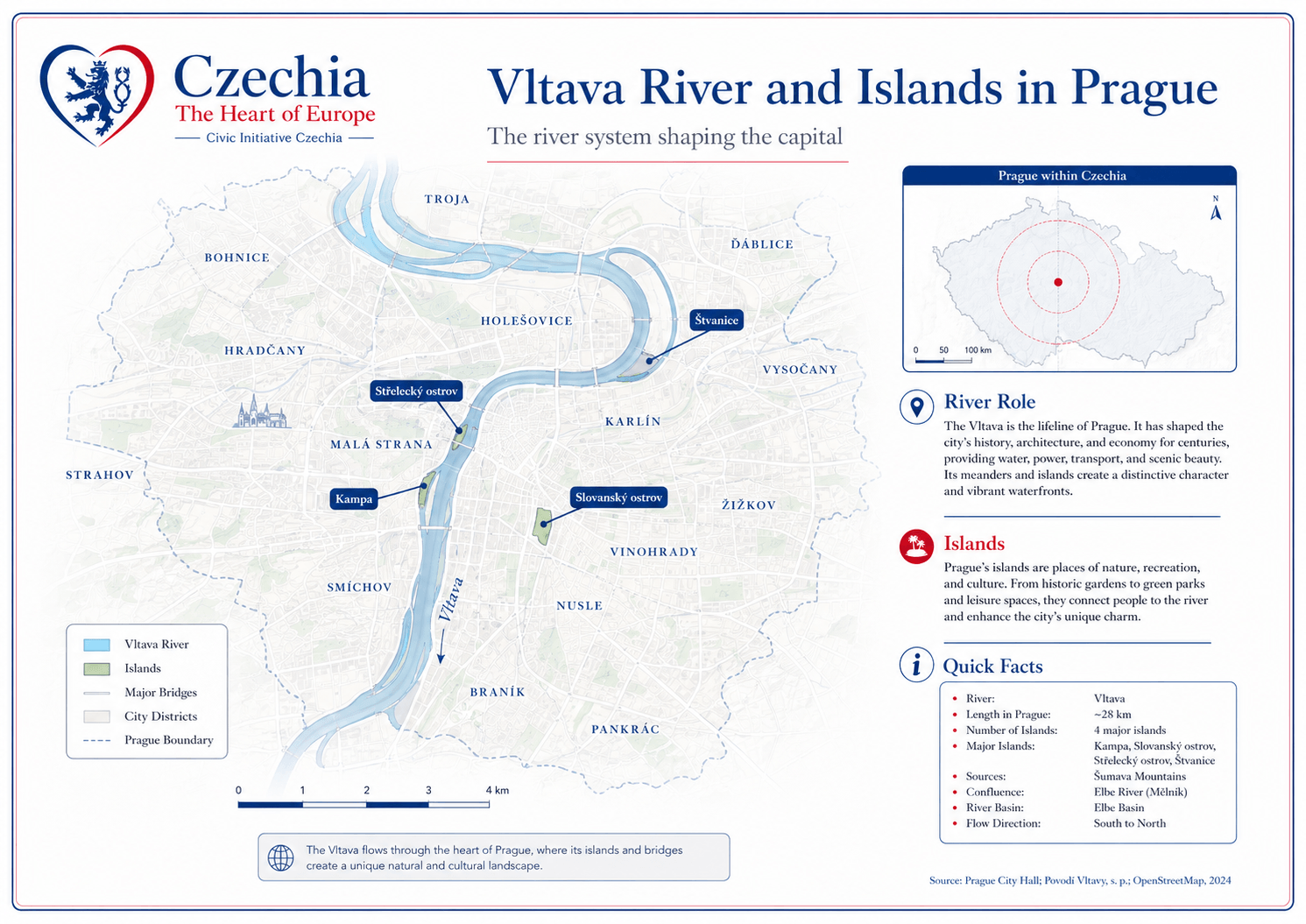
The Vltava River shapes Prague’s centre, islands and skyline.

The Vltava is the capital’s natural axis. It supports public space, urban views, embankments, islands, bridges and neighbourhood identity. It is one of the reasons Prague’s historic centre has such a distinctive landscape character.

IslandsKampa, Střelecký Island, Slovanský Island and Štvanice are civic and recreational spaces.
RiverbanksEmbankments connect culture, movement and views.
LandscapeThe river valley gives Prague its dramatic urban relief.
Vltava River and islands in Prague

Bridges

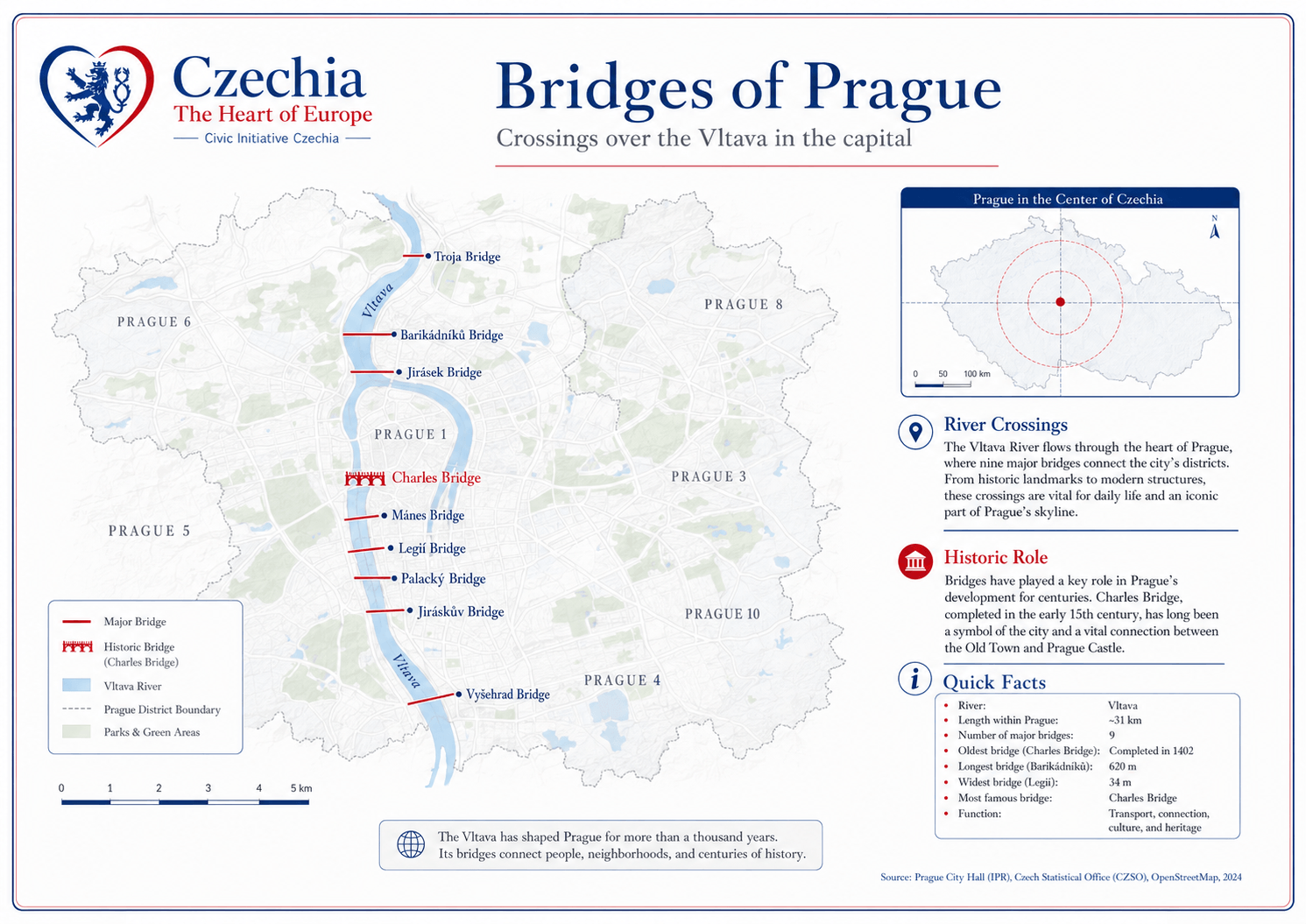
Bridges connect people, districts and centuries of urban life.

Prague’s bridges are infrastructure and symbols at once. They connect neighbourhoods, frame views and carry history, from Charles Bridge to modern road, tram and rail crossings.

ConnectionBridges link districts across the Vltava.
HeritageCharles Bridge remains the strongest symbolic crossing.
Everyday mobilityModern bridges support transport, commuting and public life.
Bridges of Prague
Bridges of Prague

Green spaces

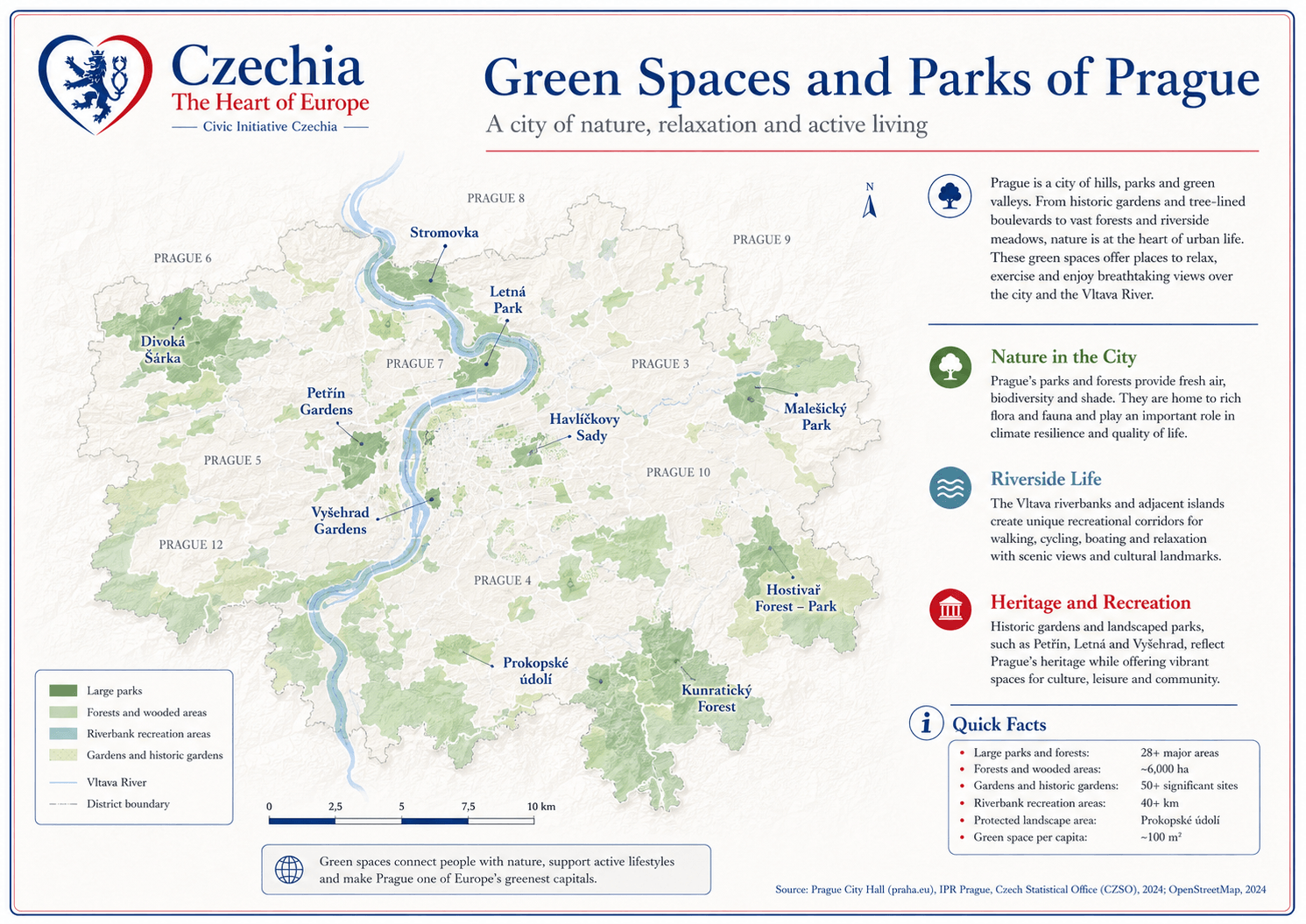
Parks, forests and slopes make Prague a green metropolitan landscape.

Prague’s green spaces support recreation, biodiversity, air quality, climate adaptation and local identity. Historic gardens and hill parks coexist with forests, valleys, riverbanks and neighbourhood parks.

ParksPetřín, Letná, Stromovka, Vyšehrad gardens and other major areas.
ForestsUrban forests and wooded valleys support recreation and biodiversity.
Climate valueGreen infrastructure matters for heat, water and quality of life.
Green spaces and parks of Prague

Protected nature

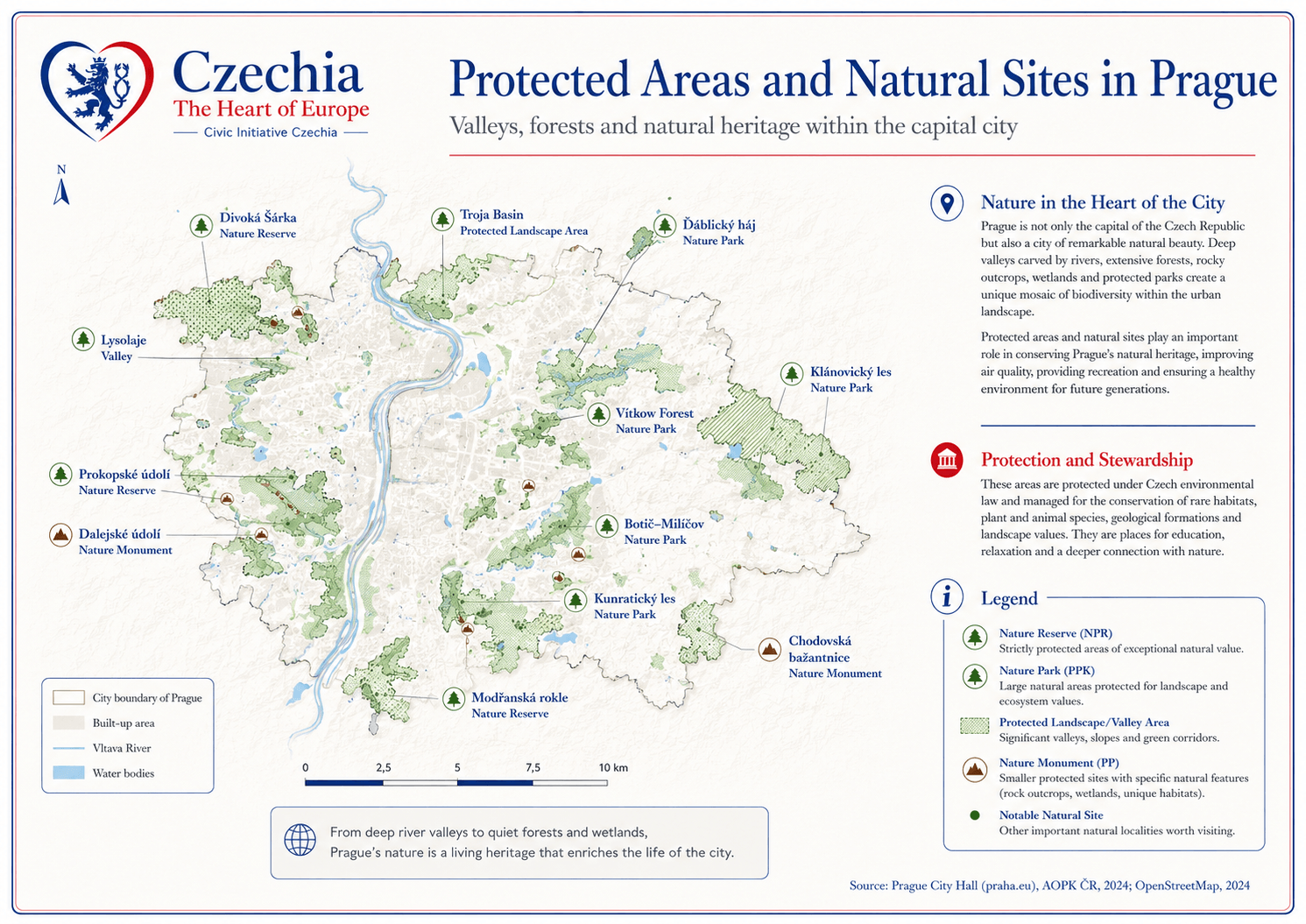
Natural sites inside the capital show that protection is also urban.

Protected valleys, forests, rocks, wetlands and nature parks make Prague a capital where natural heritage is part of daily life. These sites support biodiversity, landscape identity and environmental education.

Urban natureProtected areas are present inside the city boundary.
Valleys and forestsRiver valleys and wooded areas form a living ecological network.
StewardshipPrague’s natural sites require long-term care and responsible access.
Protected areas and natural sites in Prague

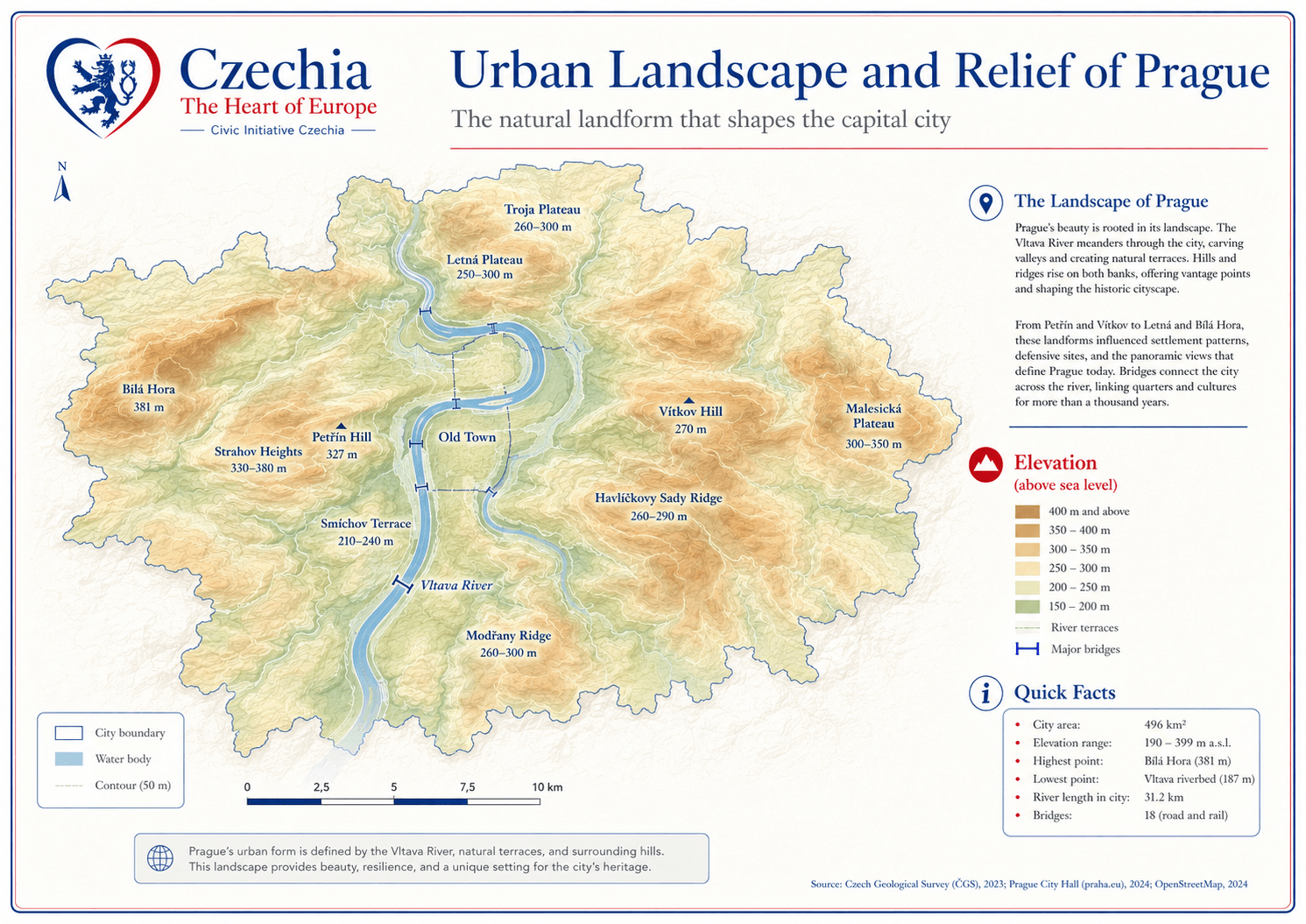
Urban relief

The city’s hills, terraces and river valley define its form.

Prague’s landscape is sculpted by the Vltava and surrounding ridges. Hills such as Petřín, Vítkov and Bílá Hora create viewpoints, neighbourhood borders and historic silhouettes.

Vltava valleyThe river cuts through the urban landscape.
ViewpointsHills and terraces create Prague’s famous perspectives.
Urban formRelief influences neighbourhoods, routes, parks and monuments.
Urban landscape and relief of Prague

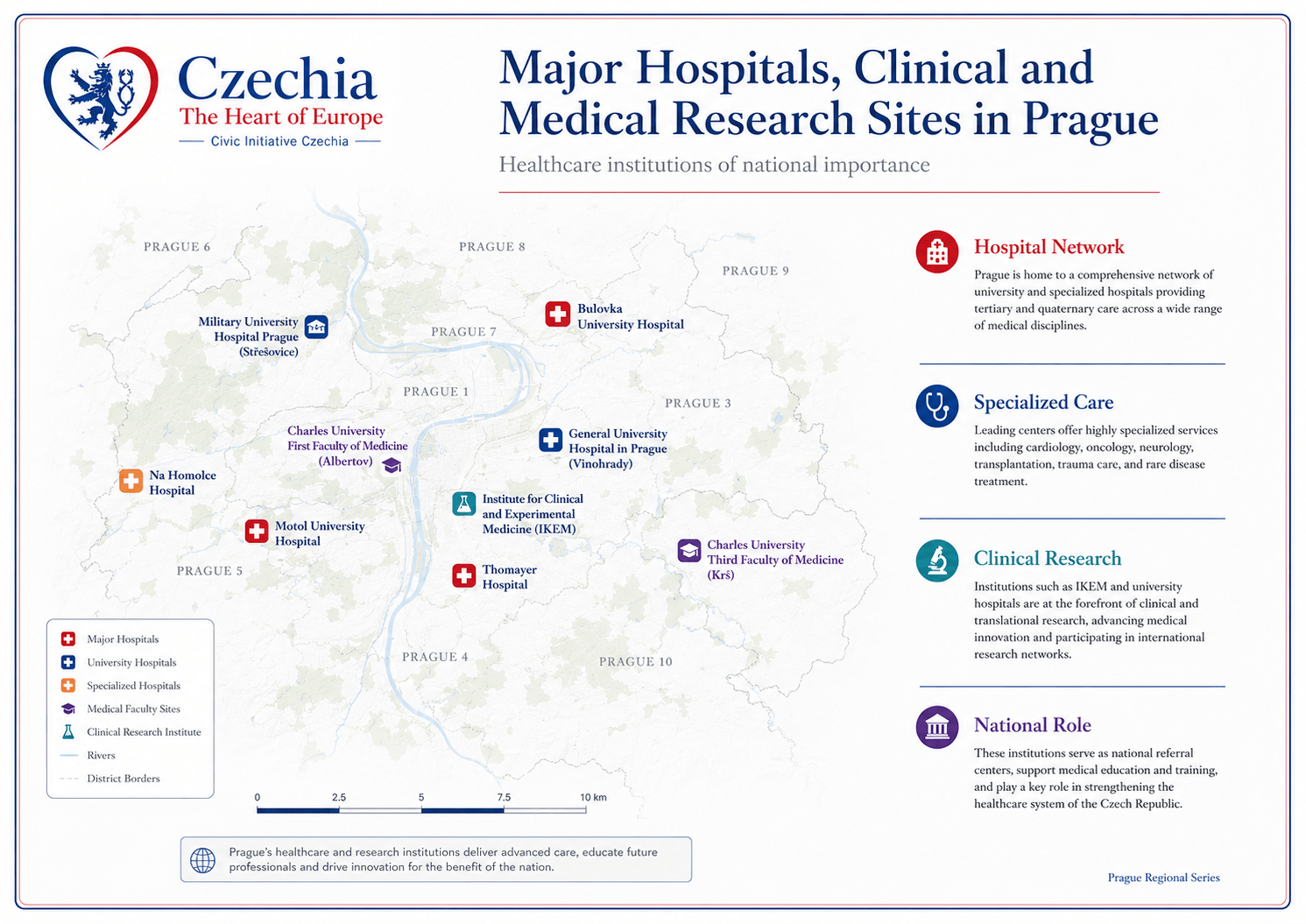
Healthcare

Prague is a national centre of advanced health care and medical research.

The capital hosts major hospitals, clinical centres, medical faculties and research institutions that serve Prague and the wider country. This health infrastructure belongs to the practical life of the capital and to Czechia’s national capacity.

HospitalsUniversity and specialised hospitals provide advanced care.
TrainingMedical faculties and teaching hospitals educate health professionals.
ResearchClinical and biomedical institutions support innovation and patient care.
Major hospitals, clinical and medical research sites in Prague

Continue exploring

Related Prague pages

Places Historic Prague UNESCO core, landmarks and visitor orientation. Read more
Culture Culture and knowledge Museums, theatres, universities and research. Read more
Regions Prague region Capital-region profile and national role. Read more